
Reviewed for safety and accuracy: This guide should be reviewed by a licensed electrician, roofing professional, or solar installation expert before publication, especially because solar installation involves roof work, electrical wiring, permits, inspections, and utility approval.
Let me be straight with you. You may be completely unaware that the number one reason people choose solar DIY is not about saving the planet. It’s the bill shock.
I remember getting a quote that was strictly for the labor part of a full solar install. It was over $10,000. Ten thousand dollars. Just to have someone show up, drill holes in my roof, and cable some wiring. That was when I started searching, “can I install solar panels myself”—and what I found blew my mind.
In many areas, homeowners are allowed to manage or perform parts of a residential solar installation themselves, but the rules depend on local permits, utility requirements, electrical code, and inspection approval. And by doing it this way, you can cut your total project costs by between 40% and 50%.
But there is a catch. Actually, a few of them. This solar panel installation guide walks you through the major steps — from calculating your real electricity usage to planning permits, installation, inspection, and final approval. I feel it’s imperative to make sure you aren’t somehow shocked mid-job by a negative inspection or an invalidated roof warranty.

Important Safety and Legal Disclaimer: This guide is for general educational purposes only. Solar panel installation involves roof work, electrical wiring, structural attachments, permits, inspections, and utility approval. Requirements vary by city, county, state, utility company, HOA, and insurance provider.
Before buying equipment or starting installation, contact your local Authority Having Jurisdiction (AHJ), utility company, homeowners association if applicable, and insurance provider. For electrical work inside or near the main service panel, hire a licensed electrician. For roof penetrations, roof warranty concerns, or structural questions, consult a qualified roofing contractor or structural professional.
Do not energize or connect a solar system to the grid until it has passed inspection and your utility has issued Permission to Operate (PTO).
Can I install a solar panel system myself? (The Honest Answer)
Yes, in many parts of the U.S., a homeowner may be allowed to apply for permits and complete some parts of a residential solar installation. However, local rules vary, and some jurisdictions or utilities may require a licensed electrician for specific electrical work. However, it’s widely accepted because building departments technically refer to this as an “owner-builder” permit.
But, and this is a big but, several states and many local utility companies insist on a licensed electrician to add that last connection in your main panel. One big recommendation is you should check with your local Authority Having Jurisdiction (AHJ) before buying a single piece of equipment.
So this is what “legal” actually means in practice:
- You are required to obtain construction permits from your local city or county.
- Approval for a grid connection from your utility.
- Residents of any sort of governed community need HOA sign-off.
- Your work must pass inspection before the system can be legally activated.
So if you are wondering, “Can I legally install solar panels myself?” – yes, it is legal. But it’s certainly not a free-for-all.
The Real Pros and Cons of DIY solar panel installation
Why DIY makes total sense:
- This leads to a labour saving of anywhere around $8,000-$15,000 for an average-sized 6kW system.
- You determine precisely what equipment you bring onto your roof.
- No aggressive sales associates and no complicated leasing contracts. Just your hardware on the roof.
Why you maybe should skip doing it yourself:
- Roof work is dangerous, and falls from height can cause serious or fatal injuries.
- Permitting can take weeks, if not months. This process is extremely painstaking.
- An incorrect installation can void your roof warranty and create leaks that may not appear until months or years later.
- Other state incentives require installation by a licensed contractor to be eligible.
You know, if you are used to doing drywall work, have experience with a light fixture and replacement or patching shingles—those basic points of home improvement knowledge provide groundwork for learning this. But if your idea of a do-it-yourself project is putting together IKEA furniture, you should maybe start smaller.
Step 1: Work Out How Much Power You Really Need
When you are thinking of clicking “buy” on anything, pull out all your electric bills for the past year. The thing you are looking for is your annual kWh consumption. You should typically see this printed on your statement or inside the online portal of your utility.
An American house consumes anywhere from 10,000 to 12,000 kWh every year. Do you live in a 2,000-square-foot house? Although the climate, appliance efficiency, and your own personal habits have a significant impact on that result, you should land somewhere in there.
What can a 2000 watt solar panel run?
On a really good sunny day, a 2kW array pumps out roughly 8 to 10 kWh. That will power a refrigerator, some lights, a few phone chargers, and your TV. This will NOT start a central AC unit at all. The majority of people are looking at a system of between 6kW and 10kW to offset an entire house.

Pro Tip: Perform a fast home energy audit before you size your equipment. Caulk windows, replace incandescent bulbs with LEDs and lower your water heater to 120 degrees. Reducing your energy use by 15% means purchasing fewer panels—saving you thousands of dollars upfront.
Step 2: Pick your system type
There are three main setups. Your selection here greatly impacts the overall cost and complexity of the entire job.
- Grid-Tied System:
The panels power your home; the excess is sent to the grid for a credit; net metering (power goes both ways). No batteries are required. This is the route that probably exists in the cheapest and most common form. The downside? For safety, your system disconnects itself automatically when the grid goes down.
- Hybrid System:
You are grid-tied, but you have a battery bank as well. It’s expensive, but it provides backup in case of a blackout. This setup is what everyone is transitioning to now.
- Off-Grid system:
This is a completely independent grid system with no connection to the utility company. Any kilowatt you consume must first be generated and stored by your own panels and batteries. It is significantly more expensive and only really makes sense for rural remote areas.
For the average everyday American homeowner attempting a first-time DIY install today? Stick with a grid-tied system. Keep things simple.
Choose a Complete DIY Solar Kit
For a first-time DIY solar installation, a complete solar kit from a reputable supplier is usually the safest and simplest option. A properly matched kit should include compatible solar panels, inverter equipment, racking, mounting hardware, wiring components, and product documentation.
This helps reduce compatibility problems and can make the permit application easier because many building departments and utilities will ask for equipment specifications, system diagrams, and electrical documentation. Before ordering, confirm that the kit meets your local building code, electrical code, utility interconnection requirements, and roof type.
A typical DIY solar kit may cost significantly less than a full professional installation because you are reducing labor costs. However, prices vary based on system size, equipment quality, battery backup, roof type, permit fees, and whether you need a licensed electrician for the final connection. Always compare the kit price, shipping cost, permit cost, electrician fee, and any local incentive requirements before deciding that DIY is the cheaper option.
Step 3: Obtain Your Permits — This Is Not the Step to Skip
And this is exactly where most DIYers get stuck. Don’t skip it. If you ignore these, you leave your system uninsured, unable to legitimately operate on the grid, and at risk of having the city physically rip it down at some point in the future.
In most areas, you will usually need the following approvals before installation can begin:
- Local building permit
- Electrical permit
- Utility interconnection application
- HOA approval, if your property is in a governed community
- Final inspection before the system can be turned on
- Permission to Operate from the utility before the grid connection
Depending on how you are applying for a permit, it will typically ask for a site plan, a system design diagram, spec sheets on your panels and inverter, and an electrical wiring schematic. Most kit suppliers will assist you with creating these documents, although a small number will charge an additional fee for the service.
It may stretch over 2 to 8 weeks for the permitting phase. Make sure you start this process long before ordering your gear.
Step 4: Assemble Your Tools and Safety Equipment
This is what you need on the site:
Tools:
- Power drill and driver bits
- Stud finder (get one that can sense AC — It would be a bad day when you drill into a live wire)
- Chalk line
- Flat pry bar
- Caulk gun
- Measuring tape
- Basic electrical hand tools, such as wire strippers and insulated screwdrivers
- Metal conduit (useful for using a conduit bender)
Safety gear (Non-negotiable):
- Roof harness and anchor system
- Slip-resistant work boots
- Safety glasses
- Work gloves
- Use a fiberglass ladder (Never use aluminum as it is conductive in electrical work)
- Hard hat (if you have helpers standing below)
Safety Notice: Safety Notice: Roof work is one of the most dangerous parts of a DIY solar installation. Use a proper roof harness and anchor system, and do not work on the roof in wind, rain, poor visibility, or unsafe conditions. Don’t feel completely at ease on a 15-foot ladder in the wind holding a 50-pound panel? Hire an experienced roofer to mount it and run wires from below.
Step 5: Install the Racking System
This is where the real physical work begins. The racking serves as the metal frame that holds your panels to your roof.
For roof mounts:
First, locate your rafters. You can find them from the inside of the attic with a stud finder, or measure out from the exposed rafter tails on the eave. Mark the locations of your rafters across the roof surface with a chalk line.
After that, place your flashings in those traced rafters. Flashings are simply waterproof metal plates that slide beneath your shingles and offer a reliable leak-proof anchor. Do not rush this step.
Pro tip: Fill every single lag bolt hole with quality roofing caulk before inserting/ driving the bolt and then after finally pounding it in. Double-sealing stops those nasty slow leaks, which won’t make it to your ceiling for at least three years.
Then, once the flashings are very well bolted, bolt your racking rails to them. Most configurations incorporate two horizontal rails per panel row.
For ground mounts:
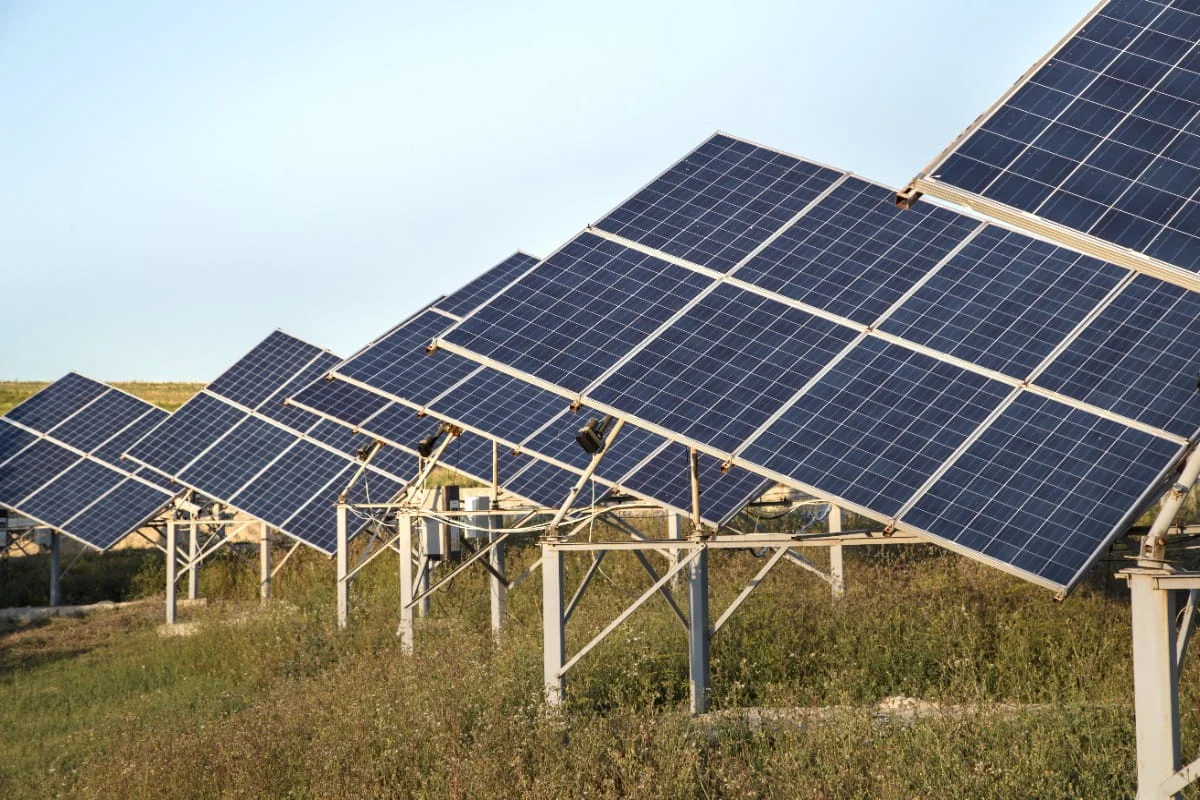
Digging anchor post holes about 18 inches deep and pouring concrete footings. Allow that concrete to set properly, at least a week before building on it. Ground mounts are subject to buried conduit work, which is covered by the National Electrical Code (NEC).
Step 6: Mount Your Inverter
The inverter’s role is to convert the DC power that your panels create into AC power that can be used in your home.
A string inverter is typically a wall-mounted, single-box unit that is installed on the exterior of your home close to your main electrical panel. They are generally affordable and easy to replace if anything goes wrong.
In contrast, microinverters get mounted to the bottom of each individual panel. They must be installed before the panels are positioned on the roof rails that will seal down over those spots, which later become completely inaccessible. They have a higher upfront cost but perform more than twice as well for nearly everyone if your roof gets partial shade.
For a string inverter, choose a shaded, well-ventilated location near your main electrical panel when possible. If the inverter is installed in direct sun or a poorly ventilated area, heat can reduce its performance and service life. Keeping the inverter reasonably close to the panels can also help reduce voltage drop, but the final location should still follow the manufacturer’s installation instructions and local electrical code.
Step 7: Mount the Solar Panels
Time for the heavy lifting. Each of these panels weighs 40 to 50 pounds and is about five feet by three feet in size. Hauling them on a ladder is cumbersome and tiring. Grab a helper for this phase.
The mid clamps are used for the intermediate panels in each row, while the end clamps lock down the first and last panels of each row. Be sure to plug in the wiring before you bolt down the panel. These snap together and look just like heavy-duty plugs; however, once the panel is clamped down tight to the rail, good luck getting to those cables below it.
Start at one end of the row, and work your way methodically from it to the other end. Check your alignment often, and step back. No one wants to have an ugly, deformed solar array stuck on their roof for the next quarter of a century.
Pro Tip: As you work, secure loose wiring to the panel frames with clips or UV-resistant zip ties. Certainly, having at least 12 inches of the wire cutting off beneath panels degrades quickly in sunlight and rain and will look absolutely awful when the inspector reaches out.
Electrical Safety Warning: Solar panels can produce dangerous DC voltage when exposed to sunlight, even before the system is connected to the home. Do not work on energized wiring. If you are not trained and legally allowed to work on electrical systems in your area, hire a licensed electrician for all wiring, grounding, disconnect, inverter, and main-panel work.
Step 8: Wire Everything Together
This step requires extreme care.
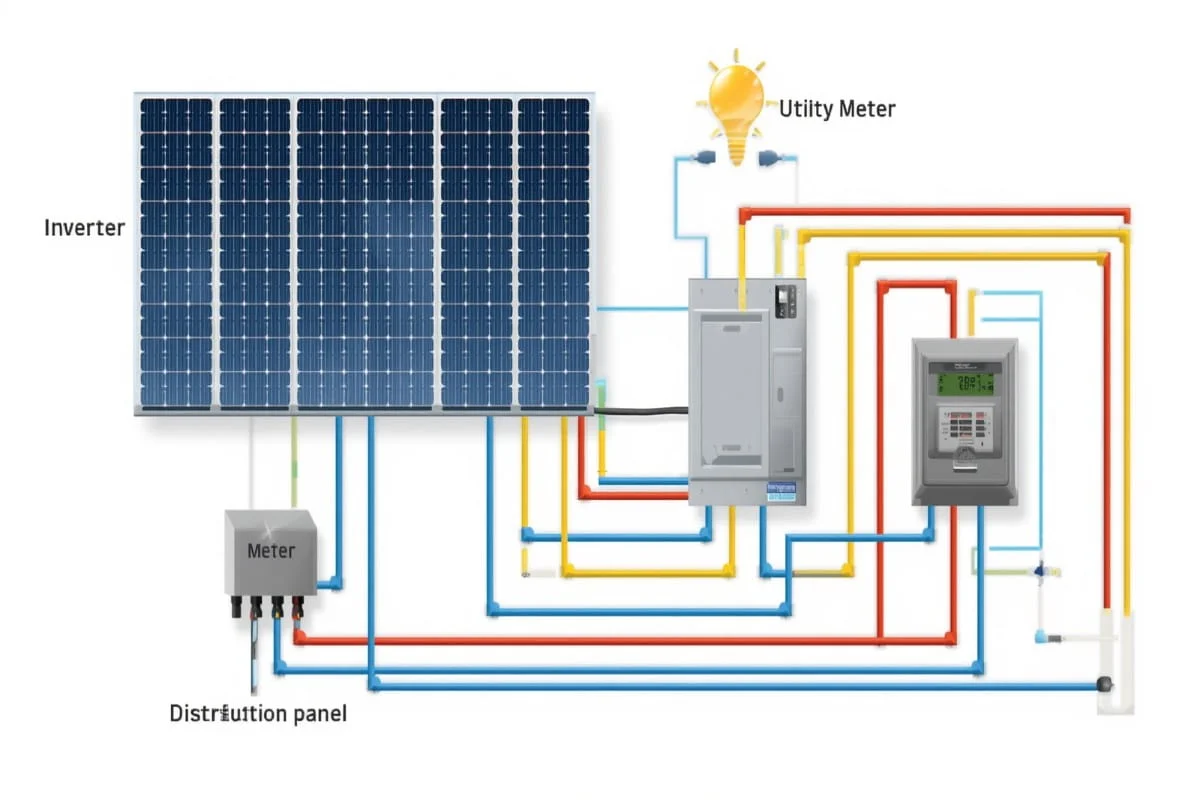
Your panels generate DC power. This wiring runs from the rooftop panels through a sealed conduit directly to your inverter. It then runs through it, converting to AC power and going into the main electrical breaker panel in your house.
It goes this way: Panels → MC4 connectors → Roof junction box → Wall-conduit → Emergency disconnect box → Inverter ← AC breaker (inside the main panel).
That emergency disconnect box is required by most cities. It allows for immediate shut-off of the power on your roof during an emergency. You can’t skip it.
Safety Notice: Wiring a solar array can involve dangerous DC voltage and work near the home’s main electrical panel. This part of the project should be completed or inspected by a licensed electrician. Incorrect wiring can create shock, fire, equipment failure, insurance, and inspection problems.
Step 9: Schedule Final Inspection and Get Permission to Operate
The physical installation may be complete, but the system should not be turned on yet. Before activation, your local building department must complete the final inspection, and your utility must issue Permission to Operate.
Contact your local building department to set up a final inspection. The inspector is going to check:
- The racking is bolted down to structural roof members.
- All wiring is up to code and safely protected.
- Access to the emergency disconnector is simple.
- The system is properly grounded.
After completion, sign-off is issued. File that paperwork along with your interconnection application with a utility company. Eventually, they will come out, replace your meter with a bi-directional net meter, and give you PTO (Permission to Operate).
Utilities typically process PTO in 2 — 4 weeks after the approval. Then, once you get that piece of paper, okay now you can switch on the system.
Step 10: Set Up Monitoring
Nearly every new inverter has a wifi monitoring app. Spend the 20 minutes to set it up and remember, seriously.
You need to be alerted as soon as a panel goes offline. Without this app an undetected shading problem or difficult-to-locate wiring problem can endure for months at zero output while costing you hundreds of dollars in lost power generation. Most apps track daily production, trends over history, and notify you of the faults in the system immediately.
Frequently Asked Questions
How much is a solar system for a 2000 sq ft house?
Taking the DIY approach, hardware for a 6–8kW system may cost around $7,000 to $14,000 before local rebates, utility incentives, permit fees, shipping, and any electrician costs. A full professional installation may cost significantly more, often because labor, design, permitting support, and workmanship warranties are included.
Important 2026 update: Federal solar tax credit rules changed after 2025. Before calculating your final cost, check the latest IRS guidance, state incentives, local rebates, and utility programs. Do not assume a 30% federal credit applies to a system installed or placed in service in 2026.
Self Solar Panel Installation Time — How Long Does It Take?
The hands-on installation usually takes 1–3 weekends for a prepared homeowner with the right tools, safety equipment, permits, and at least one helper. Allow approximately 2 hours of labor per panel. That means a 16-panel array is approximately 32 hours of time on the roof. But the entire project—permitting, ordering equipment, waiting on freight to deliver, passing inspections and getting utility approval—generally takes 2–4 months from start to finish.
Why is my electric bill so high if I have solar panels?
There are a few typical suspects. First, your system might just be too small for the amount of daily power you actually need. Second, net metering policies are all over the place; your utility isn’t necessarily giving you a 1:1 credit for sending them power. Third, many homeowners unconsciously begin to lower the AC or leave the lights on because they think electricity is “free” now. Lastly, winter weather and short days can easily cut your panel output by over 40% depending upon where a collector is located.
Why are people getting rid of their solar panels?
It nearly always ends up being greedy contracts. Back before long-term leasing (PPAs) became reality, aggressive door-to-door sales reps arrived at your front step and locked you into 20-year leases. The homeowner doesn’t own the equipment in that setup; the solar company owns it. When selling the house, you end up getting that huge lease to transfer to the new buyer—and many buyers will simply not be willing to take it on. If you do it yourself, you’re not caught in this trap: your hardware is yours from the start.
Is DIY Solar Worth It?
For the right homeowner, DIY solar can be worth it. The savings can be significant if you are comfortable with planning, permits, roof work, safety procedures, and hiring a licensed electrician where required.
DIY solar is usually best for homeowners who are confident with hands-on home improvement projects, have a safe roof layout, understand the permitting process, and are willing to spend several weekends managing the project carefully. It may not be the right choice if you are uncomfortable working at heights, dealing with electrical requirements, or coordinating inspections and utility approval.
The biggest benefit is cost control. You can choose your own equipment, avoid aggressive solar sales contracts, and reduce labor costs. However, the risks are also real. Poor installation can lead to roof leaks, failed inspections, electrical hazards, equipment problems, and possible warranty or insurance issues.
So, DIY solar can be worth it, but only if you treat it like a serious permitted construction project — not a simple weekend upgrade.
Final Words
However, if your palms get sweaty just thinking about ladders or the mere idea of navigating local city permitting gives you nightmares, it might be well worth the price premium to get a professional crew on site.
In either case, your first step is the same: dig up 12 months’ worth of electric bills. Add up your total kWh usage. That one number determines how big your system needs to be and is the simplest way to see what National Grid says can (and cannot) pay for itself on your roof with DIY solar.
Legal sources for this article
- IRS — Residential Clean Energy Credit
- OSHA — Fall prevention and roof-work safety guidance
- U.S. Department of Energy — Homeowner’s Guide to Solar
- NREL — Residential rooftop PV permitting, inspection, and interconnection resources
- Your local Authority Having Jurisdiction — city or county building department
- Your utility company — interconnection application and Permission to Operate requirements
- Your HOA, if applicable — exterior modification and roof-installation approval rules