
A leaking roof should always be treated as urgent, even when the leak looks small. Water can travel along rafters, insulation, ceiling joists, and wall cavities before it finally appears inside your home. That means the visible drip is often only part of the problem.
If water is entering your home during a storm, your first priority is not climbing onto the roof. Your first priority is protecting the inside of the house, reducing water damage, avoiding electrical hazards, and documenting the problem for insurance or a roofing contractor.
In this guide, you’ll learn what to do in the first 15 minutes of a roof leak, how to use temporary roof leak repair methods safely, when a DIY patch is reasonable, and when you should call an emergency roofing professional immediately.
Important Safety Notice Before You Start
Do not climb onto a roof during rain, lightning, high winds, icy conditions, or when the roof surface is wet. A temporary roof repair is not worth the risk of a serious fall. If the roof is steep, damaged by a fallen tree, sagging, or difficult to access, stay off the roof and call a professional roofer.
If water is dripping near light fixtures, outlets, switches, ceiling fans, or your electrical panel, turn off power to the affected area from the breaker box if it is safe to do so. Do not touch wet electrical fixtures. Contact a licensed electrician or emergency roofing contractor if there is any sign of electrical danger.
The steps in this guide are temporary damage-control measures only. They are not a substitute for a full roof inspection or permanent roof repair.

leaking roof emergency ceiling drip
Call a Professional Immediately If You Notice These Warning Signs
Some roof leaks are too risky for a temporary DIY repair. Call an emergency roofer immediately if:
- The ceiling is sagging, bulging, or cracking.
- Water is leaking through light fixtures, outlets, or electrical areas.
- You smell burning, see sparks, or notice flickering lights near the leak.
- A large tree limb or storm debris has punctured the roof.
- Water is entering multiple rooms at the same time.
- The roof decking feels soft, bouncy, or visibly rotten.
- You hear popping, cracking, or shifting sounds from the ceiling or attic.
- The leak is near a chimney, skylight, valley, or major roof penetration.
- You cannot safely access the leak area without walking on a wet or steep roof.
If any of these signs are present, focus on protecting the interior of your home and wait for a qualified professional. A temporary patch should only be attempted when the area is safely accessible and the damage is minor.
A Roof Leak — Is It Really an Emergency?
Yes, a roof leak should be treated as an emergency, especially if water is actively entering your home. Even a small drip can lead to damaged drywall, wet insulation, mold growth, electrical hazards, and structural problems if it is left untreated.
Water rarely travels in a straight line. It can move along rafters, roof decking, insulation, and ceiling joists before it appears inside a room. This means the visible drip may not be directly below the actual leak source.
During the first 24 hours, drywall can absorb water, paint may begin to bubble, and attic insulation can become wet and ineffective.
After 48 hours, damp, dark areas may create conditions where mold can begin to develop.
After several days, repeated moisture exposure can damage wood framing, ceiling materials, and interior finishes.
Treat the leak as an emergency if:
- The ceiling is bulging, sagging, or holding trapped water.
- Water is leaking through light fixtures, outlets, or wall switches.
- You hear cracking, popping, or shifting sounds overhead.
- A tree limb, storm debris, or missing shingles have exposed the roof.
- Water is entering more than one room.
The situation may be less urgent if the area is dry, the stain is old, or the leak only appears during heavy rain. However, even a minor roof leak should still be inspected before it becomes a larger repair.
Safety First: How to Approach a Roof Leak Safely
Before attempting any temporary roof repair, decide whether the roof is safe to access. In many emergency situations, the safest repair starts from inside the home, not on the roof.
Never walk on a wet roof, icy roof, steep roof, or storm-damaged roof. Rain, wind, loose shingles, moss, and wet metal surfaces can make the roof extremely slippery. If the weather is poor or the roof feels unsafe, stay on the ground and use the indoor water-control method explained below.
Saving money on a temporary repair is never worth risking a serious injury. When in doubt, call an emergency roofing contractor.
Gear you actually need:
- Rubber-soled boots with real grip. It is a extremely unsafe if you wear your old, bald mowing sneakers up there.
- A solid extension ladder. Configure it properly — pull it one foot away from the wall for every four feet it climbs into the air.
- A spotter. Have a friend or spouse stand at the bottom in case you fall.
- A safety harness if you are more than 6 feet off the ground.
If the weather outside is trash, stay inside. For that exact reason, we included an indoor trick in this guide.
What Not to Do During a Roof Leak Emergency
A roof leak can make homeowners act quickly, but some quick decisions can make the damage worse or create serious safety risks.
- Do not walk on a wet roof. Wet shingles, metal panels, tiles, and flat roof membranes can be extremely slippery.
- Do not use thin plastic sheets or lightweight tarps outdoors. They can tear in the wind and allow more water to enter.
- Do not seal over active electrical leaks. If water is near lights, outlets, switches, or wiring, turn off the power and call a professional.
- Do not ignore a sagging ceiling. A bulging ceiling may be holding a large amount of water and can collapse without warning.
- Do not assume the leak is directly above the indoor drip. Water often travels along rafters, insulation, or ceiling joists before becoming visible.
- Do not treat a temporary patch as a permanent repair. A tarp, roof cement, flashing tape, or rubberized spray should only buy time until the roof can be inspected properly.
What To Do in the First 15 Minutes
When you notice an active roof leak, stay inside and focus on controlling the water first. Do not climb onto the roof during rain, wind, lightning, or unsafe conditions.
- Place buckets under the leak:
Put buckets, trash cans, or large containers under the dripping water. Place towels around the base to reduce splashing and protect flooring. - Protect furniture and valuables:
Move furniture, electronics, rugs, and personal belongings away from the leak. If something cannot be moved, cover it with plastic sheeting or a waterproof tarp. - Turn off electricity if needed:
If water is near a light fixture, outlet, switch, ceiling fan, or electrical panel, turn off power to that area from the breaker box if it is safe to do so. Do not touch wet electrical fixtures. - Relieve a dangerous ceiling bulge only if safe:
If the ceiling is sagging with trapped water, it may collapse. If there is no electrical fixture nearby and it is safe to do so, place a bucket underneath and make a small drain hole at the lowest point of the bulge. Wear eye protection and stand to the side. If you are unsure, call a professional immediately. - Document the damage:
Take photos and videos before cleaning up. Capture wide shots of the room, close-ups of the leak, damaged drywall, wet flooring, attic moisture, and any visible storm damage. - Look for the source from inside the attic:
Use a flashlight to inspect the attic if it is safe to access. Look for wet insulation, dark water stains, damp rafters, or water trails. Remember, the visible ceiling leak may not be directly below the roof opening.

Insurance Documentation Checklist
Before cleaning up too much of the damage, document everything clearly. This can help if you need to file a homeowner’s insurance claim.
Take photos and videos of:
- The active leak inside the home
- Ceiling stains, bubbling paint, or sagging drywall
- Wet flooring, furniture, rugs, or personal belongings
- Water in the attic, wet insulation, or stained rafters
- Exterior storm damage, if it is safe to photograph from the ground
- Receipts for tarps, buckets, plastic sheeting, roof cement, or emergency service calls
- Any temporary mitigation steps you took to reduce further damage
If you hire a roofer, ask for a written inspection report that explains the likely leak source, visible roof damage, and recommended permanent repair.
Common Roof Leak Sources to Check First
Not every roof leak comes from a large hole in the roof. Many emergency roof leaks start around weak points where water already has a path inside. Common sources include:
- Chimney flashing: Cracked or loose flashing around the chimney can allow water to run behind the shingles.
- Pipe boots: The rubber seal around plumbing vent pipes can split, dry out, or pull away from the pipe.
- Skylights: Failed seals, cracked flashing, or poor installation can cause leaks around the frame.
- Roof valleys: Valleys handle a high volume of water, so damaged shingles or clogged debris here can quickly cause leaks.
- Missing or lifted shingles: Wind-damaged shingles expose the underlayment and roof deck.
- Clogged gutters: When gutters overflow, water can back up under the lower edge of the roof.
- Flat roof seams: On flat or low-slope roofs, open seams, ponding water, or membrane cracks are common leak points.
5 Effective Temporary Ways to Repair a Leaky Roof
Once the interior of your home is protected and the leak area is safe to access, you may be able to apply a temporary roof leak repair. These methods are designed to reduce water entry until a qualified roofer can inspect the roof and complete a permanent repair.
Do not attempt any exterior roof repair during rain, lightning, strong wind, icy conditions, or when the roof surface is wet. They will last for a couple of months, enough to buy you time to hire someone.
Method 1 — Heavy-Duty Waterproof Tarp (Good for Large Areas)
The classic fix for emergencies! If you get your tarp right, it buys you 2 months.
What you need:
- A heavy-duty polyethylene tarpaulin (6 to 8 mils). By the end of one windy night, those dollar-store ones literally go to pieces!
- A few 8-foot 2×4 boards.
- Deck screws.
- Sandbags.
How to do it:
- Identify the weak point from ground level (bring some binoculars along if you can). Then you will need to add around 4 ft of extra coverage on every side.
- Unfold the tarp on the ground and screw 2×4 boards to the edges with screws. Never nail through the tarp; every nail hole is a new leak point.
- Carefully move the prepared tarp into position only if roof access is safe and drape it over the leak. Make sure it crosses the roof peak to prevent water from dripping underneath.
- Screw two 2x4s together at the ridge to pinch the tarp, clamping it down at the top edge.
- Use whatever boards and sandbags you have left to weigh down the sides and bottom. Wind blows it off the corners first and attempts to rip the tarp off, so pin them down hard.
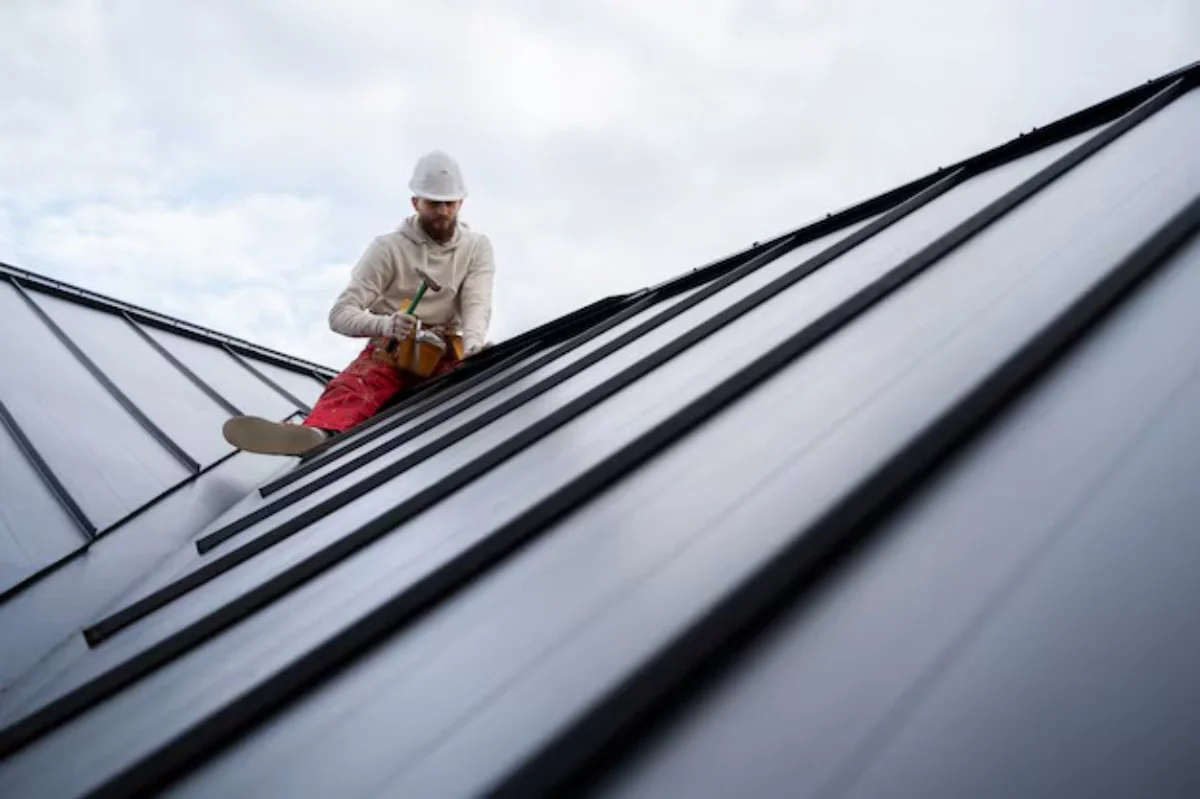
Pro Tip: If a storm comes through, watch it closely. If the wind gets crazy, then sling a few more sandbags up there. In fact, a loose tarp can act as a funnel, carrying even more water into your living room.
Method 2 — Roof Cement or Mastic (Good for Small Cracks)
Does a strange gap show up next to your chimney? Perhaps a torn rubber boot around a pipe, or a shingle that broke in two pieces? Grab a tub of roofing cement.
How to apply it:
- Wipe it up with an old rag because you want as much moisture out of that space as humanly possible.
- Take a trowel or caulking gun and spread a thick sealant on the fractured area.
- If a shingle is flapping loose, lift it up gently, smear some cement under there, press it down hard, and seal the top edge so water can’t get behind it.
- To prevent rust, put a dab of cement on all visible nail heads.
Pro Tip: Only purchase cans that say “wet patch” or “all weather.” Regular cement is absolutely useless on wet shingles!
Method 3: Waterproof flashing tape (a quick emergency roof leak patch)
Bituminous flashing tape should not be overlooked. It’s absurdly sticky, pliable, and waterproof. If scaling the outside walls seems too daunting, go ahead and just slap it from inside the attic.
Ideal for small nail holes, rips in metal flashing or flat roof seams. Simply peel, stick, and cover the damaged areas, with the ends overlapping by at least 3 inches. Press down firmly to release all the trapped air bubbles. However, in hotter climates, it tends to perish after only a month or so, as the hot summer sun bakes the glue.
Method 4: Grab a Can of Rubberized Spray
Grab a can of Flex Seal or something similar. Honestly, it’s a total lifesaver for those weird, tight corners where flashing tape just refuses to stick and trying to use cement would just make a gigantic mess.
Ensure that the location is relatively dry. Spray a coat, wait for it to get tacky, then spray again. A few coats build up a good rubbery barrier. But is it enough for a gaping hole? No… But for an obnoxious little pinhole leak? It works perfectly.
Method 5 — Attic diversion from the inside (When the roof is not safe)
Other times, it’s just a horrible idea to venture out. Stay off the roof if it’s pitch-black or raining sideways, or if you have no boots.
Go into the attic instead. Get some heavy plastic sheeting, tie or even tape it between the rafters right where your water is coming in, and funnel that straight into a giant 5-gallon bucket.
It doesn’t fix the roof, but it prevents water from damaging the drywall below. Just make sure to empty that bucket constantly. That is precisely what you meant to prevent — an overflowing bucket smashing across the ceiling.
Temporary Roof Leak Advice by Roof Type
Different roofing materials need different temporary repair approaches.
- Asphalt shingle roofs:
Missing, cracked, or lifted shingles can often be temporarily covered with a heavy-duty tarp or sealed with roofing cement if the area is small and safely accessible.
- Metal roofs:
Leaks often happen around screws, seams, flashing, or penetrations. Waterproof flashing tape or rubberized sealant may help temporarily, but avoid walking on wet metal panels because they are very slippery.
- Flat roofs:
Flat roof leaks often come from seams, punctures, ponding water, or membrane cracks. Self-adhesive flashing tape, roof patch material, or a weighted tarp may help until a professional can inspect the membrane.
- Tile roofs:
Tile roofs are fragile and can crack under foot traffic. Avoid walking on tile unless you are trained to do so. Use interior water control methods and call a roofing professional.
Tools and Materials Quick-Reference Table:
| Tool / Material | What It’s For |
| Heavy-Duty Tarp (6–8 mil) | Covering up missing shingles and large damaged sections |
| 2×4 Lumber Boards | Keeping the tarp secured without screwing into the roof |
| Plastic Roofing Cement | Repair minor fractures, voids, and loose flashing |
| Waterproof Flashing Tape | Rip patches or seams on flat roofs |
| Putty Knife / Caulk Gun | Smearing cement around smoothly |
| Rubberized Spray | Coating awkward pinhole leaks |
| Buckets and Towels | Catching the disaster indoors |
| Plastic Sheeting | Building an indoor funnel system |
| Non-Slip Boots + Harness | reducing fall risk and improving job-site safety |
Temporary Repair vs. Permanent Repair Cost Disclaimer
A temporary roof leak repair is designed to reduce immediate water damage. It is not meant to solve the root cause of the leak.
The final repair cost can vary depending on the roof material, roof age, leak source, storm damage, decking condition, interior water damage, and local labor rates. A small flashing repair may be simple, while widespread water damage, rotten decking, or multiple leak points may require a larger repair or roof replacement.
For an accurate cost, schedule a roof inspection and get a written estimate from a qualified roofing contractor.
DIY vs. Professional: when should you replace a roof?
Now, let us be real here for a second, shall we? One downside of DIY fixes is that they will run out over time. The sun, wild variations in temperature and rain you can almost swim through will demolish your patch job in a few months. You are literally just hitting the pause button.
Call a professional immediately if:
- Your roof is more than 2 decades old. When one spot goes, the rest of the roof follows closely behind.
- You have water leaking in three completely unrelated rooms. That’s not a localized fissure; that’s an enormous systemic failure.
- The wood decking on top is soft, springy or visibly decayed.
How to Prevent Future Leaks
Once the initial panic has subsided a bit, do some preventive work.
- Check it out: Schedule a professional to walk the roof before storm season arrives. Early detection of a cracked shingle can lead to the biggest financial savings you can achieve.
- Clean the gutters: Seriously. When gutters get clogged, water backs up directly beneath the bottom row of shingles. It’s the single most common cause of leaks that could have been completely avoided.
- Trim the trees: Branches brushing against your roof will sand off the protective coating on your shingles.
- Quickly remedy the minor details: A tiny $20 section of cracked flashing can readily cause a time-consuming $5,000 drywall disaster if left to four winters of neglect.
Frequently Asked Questions
How long will a temporary roof patch last?
It depends entirely on the weather and the materials you used. A correctly secured weighted tarp will withstand 60 to 90 days. For a month or two, cement and flashing tape typically hold up. Rubberized spray? Longer in summer (if the sun’s shining at it) — 2 to 4 weeks at best.
Is An Emergency Roof Repair Covered By Homeowner’s Insurance?
Almost always yes, if it was caused by a sudden storm or accident. Tarping up is “emergency mitigation”, and your insurance company literally expects you to do it to stop the bleeding. Simply snap some good pictures of the mess and get them on the phone within 48 hours. Keep your receipts.
How do you repair a flat roof in an emergency?
This means that you will most definitely want to use self-adhesive flashing tape or thick rubberized coatings. Simply apply it directly over the rip, approximately 4 inches beyond the opening in all directions, and rub it down fully. In the case of a major leak, you may need to lay a tarp on the roof and secure it with heavy sandbags.
Can I patch the roof myself?
Yes, you can definitely do it if the leak is in a small and easily accessible area. Then again, if you think that just figuring out how to repair roof damage for the weekend somehow means your problems are completely solved, think again. You still need to get some professionals out to check it before your patch disintegrates completely.
Can a leaky roof bring down a ceiling?
It happens quicker than you’d expect. The second drywall absorbs water; it basically turns into wet mush. When you look up and notice a large bubble forming in your ceiling paint, be sure to poke it immediately to drain the water. If you don’t, you’re about to drop the whole heavy sheet of drywall on your floor.
Final Thoughts
A leaking roof should never be ignored, even if the drip looks minor. Start by protecting the inside of your home, moving valuables away from the leak, controlling the water, turning off power if electrical areas are affected, and documenting the damage.
Once the interior is safe, choose a temporary solution only if the leak area is safe to access. A heavy-duty tarp, roofing cement, flashing tape, rubberized sealant, or attic water-diversion setup can help limit damage for a short time.
However, temporary repairs are not permanent roof repairs. After the leak is under control, schedule a professional roof inspection to identify the source, check for hidden water damage, and prevent the next storm from turning a small leak into a much larger repair.
Editorial Review Note: This article was reviewed for accuracy, safety, and practical roofing guidance by an experienced roofing professional. The recommendations focus on temporary roof leak control, homeowner safety, water-damage prevention, and knowing when to call a qualified roofer for a permanent repair.