
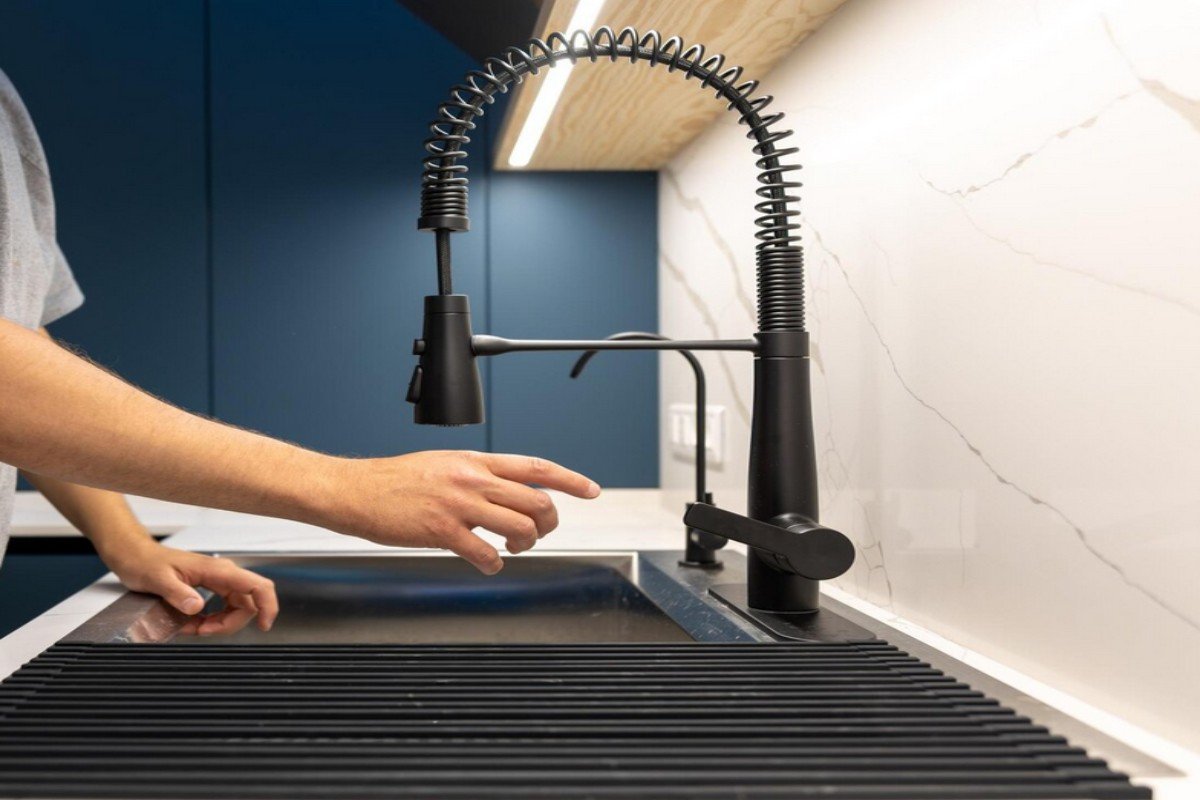
Your kitchen faucet is used dozens of times a day. Washing dishes. Rinse produce and fill up a pot. It’s among the most heavily used pieces of equipment in your entire home — and once it starts to drip, leak, or look lousy, replacing it must be high on the list immediately.
But this: “How much does it cost to replace a kitchen faucet?” is the question that the masses of people are typing into Google at night.
Short answer? The average homeowner spends between $162 and $364 for a complete professional replacement. The average nationwide is roughly $262. That number varies a lot based on which faucet you choose, where you live, and if you’re calling in a plumbing pro or using your own tools.
We break it all down — no guesswork, no vague estimates!
How We Estimated These Costs
We reviewed current kitchen faucet replacement pricing from professional plumbing estimates, common labor ranges, retail installation services, and real-world replacement scenarios. The cost ranges in this guide reflect standard faucet swaps, upgraded faucet installations, fixture prices, labor time, replacement parts, and common issues plumbers often find under the sink.
Most standard kitchen faucet replacements take 1 to 2 hours when the shut-off valves, supply lines, and sink openings are already in good condition. Costs rise when the plumber finds corroded valves, leaking supply lines, poor access under the cabinet, mismatched sink holes, or a faucet that requires electrical power or new plumbing connections.
Quick cost overview: Kitchen faucet replacement price in 2026
| Expense Level | Cost Range | What It Covers |
| Low End | $91 – $160 | Basic DIY swap, entry-level faucet |
| National Average | $262 | Standard pro install + mid-range fixture |
| High End | $519 – $900+ | Luxury or smart faucet, and complex plumbing jobs |
They use real quotes from thousands of plumbers and industry averages from 2026. Your real number will vary based on a few things that we cover below.

Understanding Kitchen Faucet Replacement Cost
The Faucet Itself
Usually, your single largest expense. Faucet prices actually vary tremendously depending on type, brand, and features.
Kitchen Faucet Cost by Brand
| Faucet Brand | Typical Faucet Cost | Best For |
|---|---|---|
| Moen | $150 – $500 | Reliable everyday kitchen faucets |
| Delta | $120 – $450 | Easy-to-use pull-down and touch faucets |
| Kohler | $200 – $700 | Premium kitchens and long-term durability |
| American Standard | $100 – $400 | Budget-friendly replacement projects |
| Grohe | $250 – $800+ | Luxury kitchens and modern designs |
Brand matters because higher-quality faucets usually have better cartridges, stronger finishes, longer warranties, and fewer leak issues over time. A cheaper faucet may lower the upfront cost, but it can wear out faster, especially in homes with hard water or heavy kitchen use.

- Single Handle Faucets: $150 — $350
These are the most popular and inexpensive ways. All hot and cold is controlled by one handle. Easy to use, easy to install. The average plumber can replace a fixture in less than an hour.
- Pull-Down and Pull-Out Faucet: $175 – $500
These typically have sprayer heads that are removable from the spout. Pull-down attached closer to the sink; pull-out spreads out. Great for rinsing dishes. Finally, a big upgrade from an annoying stationary faucet.
- Widespread and Bridge Faucets: $70 to $900
Most widespread faucets have three individual components — a separate hot handle, a cold handle, and the spout. Bridge faucets are those that have the two handles connected with a horizontal bar. Premium materials, and with that a few hundred bucks can go pretty quickly.
- Touchless and Smart Faucets: $400 – $700
Motion-activated. Some react to a wave of the hand; others respond when they are tapped on their base. Super convenient for messy cooking. Requires a power source (battery or hardwired), which adds an extra layer of complication to the install.
- Pot Fillers and Wall-Mounted Faucets: $100 — $800
Pot fillers are mounted above the stove and conveniently swing out over burners. If you hate lugging heavy pots from the sink, then that is great. Wall-mounted taps originate from the wall, instead of up from the counter. Both need to be fed by individual lines for water, which drives the cost up.
Faucet Finish and Material Costs
The finish affects the final price, but the internal material matters even more. As plumbers, we look beyond colour and style. A faucet should feel solid, mount securely, and hold up against daily use, water pressure, and mineral buildup.
| Finish / Material | Typical Cost | Plumber’s Notes |
| Chrome | $40 – $200 | Affordable, easy to clean, but shows water spots |
| Brushed Nickel | $80 – $600 | Popular choice, hides fingerprints well |
| Matte Black | $100 – $600 | Stylish, but low-quality coatings may scratch |
| Stainless Steel | $105 – $750 | Durable and good for busy kitchens |
| Brass | $150 – $750+ | One of the strongest long-term choices |
| Bronze / Brushed Gold | $200 – $900+ | Premium look, usually higher fixture cost |
For long-term value, solid brass and stainless steel faucets are usually better choices than lightweight plastic or zinc alloy models. If the kitchen is used heavily every day, spending a little more on a stronger faucet can prevent early leaks, loose handles, and cartridge failure.
Plumber cost to install kitchen faucet
Here is where many homeowners miscalculate their budget.
Professional plumbers during working hours can charge $45 and up to over $200 per hour. For most jobs, a simple exchange on an ordinary single-handle tap can take 1 to 2 hours for labor included, or $100-$400.
However, it would take 3 to 8 hours of work if the job is more complex—such as corroded shutoff valves, access in tight cabinets or needing new supply lines. That means labor costs of $480 or above.
Similarly, most plumbers will charge a trip fee or a minimum charge of $150— $200 just for showing up. A “bare-bones” job rarely even comes in under that price, always more than a few hundred bucks.
5 Factors That Drive Your Cost Up (or Down)
1) Your Existing Plumbing Condition:
This is the big unknown. Those shut-off valves haven’t been turned in 15 years — they may have corroded shut. Out with the old braided steel supply lines if they’re over a few years old, too. All of these things will add $100 to $300 (and sometimes a lot more) to your bill. A good plumber will check these beforehand and inform you upfront.
2) Sink Hole Compatibility:
Are you replacing a 3-hole faucet with one that has a single handle? You’ll find that you’re going to need deck plates to cover those additional holes. The other way is through drilling, but that requires labor—more expensive labor. Maintaining the same style and footprint keeps your costs down.
3) Water Pressure Issues:
If the psi from your home is under 40 psi you need a booster pump ($800 – $1,000+). You can use a pressure regulator (costing about $250 – $350), if it’s over 80 psi. The majority of homes won’t require either one — but it’s good to know.
4) Add-On Features:
Want a built-in soap dispenser? That’s another $25 – $50. A water filtration tap? Add $150 – $500. Hot water dispensers $300 – $600. These add-ons are lovely — just remember to budget for them!
5) Disposal and Supplies:
Standard installation supplies (fittings, connectors, mounting hardware) tend to be $14 – $16. Disposal of your old faucet and debris? Around $62 – $71. Little numbers but they all add up together.
Real Plumbing Issues That Can Increase the Cost
The faucet itself is not always the problem. Many higher replacement bills come from what plumbers find underneath the sink.
Common extra issues include:
| Plumbing Issue | Possible Extra Cost |
|---|---|
| Corroded shut-off valves | $100 – $300 |
| Old or leaking supply lines | $40 – $150 |
| Damaged mounting hardware | $25 – $100 |
| Tight cabinet access | $50 – $200 |
| Sink hole mismatch | $50 – $250 |
| Minor leak repair | $75 – $250 |
A standard faucet replacement is simple when everything under the sink is in good condition. But if the valves are stuck, the supply lines are old, or the old faucet is rusted in place, the job takes longer and costs more.
Should You DIY or Hire a Plumber?
A totally fair question. Here’s the honest take.
DIY works if:
- You are replacing one standard fixture with another of the same style and footprint
- Your shut-off valves are tight, and water supply lines are sound
- You feel at ease getting under a sink with a basin wrench
- You have 1 to 2 hours and do not mind if it gets a little close quarters
Do the swap yourself (DIY), and you will save anywhere from $260–$480 in labor. That’s real money.
Hire a plumber if:
- Your plumbing is aging or you are not sure
- You are changing kinds of faucets or introducing new water lines
- You have past under-sink leaks or water damage
- The cabinet is deep, a tighter space, or hard to get in
What do folks underestimate?
A slow leak from any bad seal can cause your cabinet floor to warp and mildew to grow in the wall. By the time you realize it, you’re facing a $1,000+ repair bill — as opposed to a simple faucet job at $200. The cost is not a big deal for everyone, but many people feel that the peace of mind from a professional install is worth it.
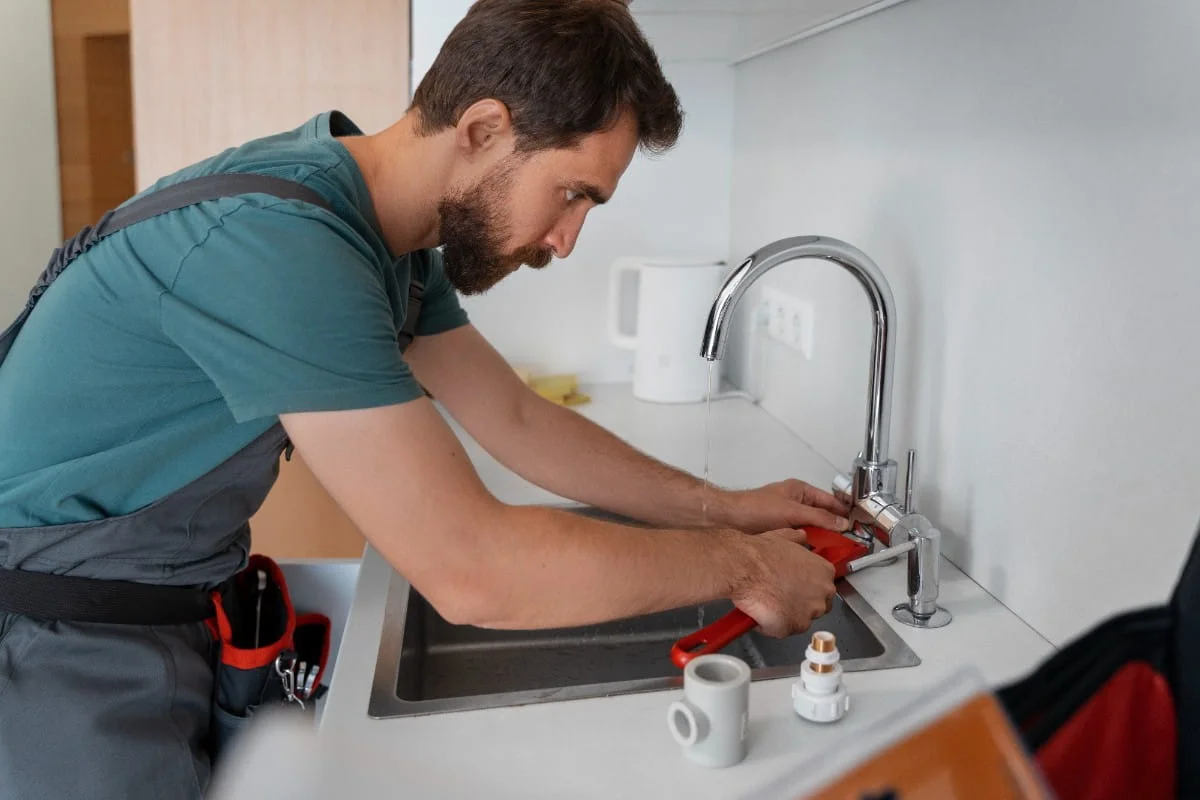
Pro Tip: Clear out everything under the sink before your plumber arrives and ensure that they have access to shut-off valves. You’ll save time on the bill.
Repair vs Replacement Cost
Not every faucet problem means you need a full replacement. A plumber will usually check the cartridge, aerator, handles, seals, supply lines, and shut-off valves before recommending a new faucet.
| Service | Typical Cost | Best Choice When |
|---|---|---|
| Faucet repair | $75 – $200 | The faucet is newer and only has a small leak |
| Cartridge replacement | $80 – $250 | The faucet drips but the body is still good |
| Aerator cleaning/replacement | $10 – $50 | Water pressure is weak or uneven |
| Full faucet replacement | $162 – $364 average | The faucet is old, corroded, leaking, or loose |
Home Depot and Lowe’s Installation: What to Expect
Home Depot and Lowe’s have installation services done by third-party certified contractors.
- Will Home Depot install a new sink faucet for me?
Yes. They connect you with local qualified subcontractors who do the work. You usually have to buy the faucet from them directly in their store.
- How much does Lowe’s charge to install a kitchen faucet?
Additionally, Lowe’s has a network of local contractors who offer their services. Flat-rate installation usually costs $150 – $250, excluding the cost of the faucet and necessary construction adjustments as problems arise during the job.
Both options are simple if you were going to get the faucet there anyway. Also, be careful to always ask upfront what is included in your flat fee — and what is not.
How Long Should a Kitchen Faucet Last?
With normal use, a good faucet will last 10 to 15 years. Solid brass bodies hold up the best. Plastic and zinc alloy internals wear out very quickly (especially in hard waters).
It’s time to replace (not just repair). Here are the signs:
- Visible corrosion or signs of rust on the body or handles
- Constant dripping even after replacing the cartridge
- A persisting low water pressure
- The faucet itself is more than 10 years old and acting up in multiple directions at once
- The cost of repairs is coming in at 50% or more than the price for a new one
Only if it’s less than 5 years old and has a drip or wobbly handle? In fact, a simple fix generally makes more financial sense as long as it is under the $100 mark.
Can a Handyman Change a Kitchen Faucet?
For simple replacements, a handyman is perfectly acceptable — yes. They usually charge lower rates than a licensed plumber.
The catch: if your kitchen project involves running new supply lines, moving plumbing, and other aspects that might technically be considered a remodel under the building codes (and yes, they vary), you may end up requiring a licensed plumber. Issuing permits for that type of work typically runs between $50 and up to $500, depending on your region.
For a simple like-for-like replacement? A handyman is all right, and usually cheaper.
5 Simple Tips for Saving On Your Kitchen Faucet Replacement Cost
1) Buy a retrofit model. Select a faucet with measurements compatible with your current sink holes. No drilling, no deck plates, no additional labor. The easiest money you’ll save.
2) Shop clearance. Home improvement stores refresh their inventory from time to time. Even discontinued faucet models often go 30% to 50% off – higher quality, lower price points.
3) Bundle your plumbing tasks. Tackle all of those jobs in one trip: If you have been postponing that treatment for a sluggish bathroom drain or replacement of a shutoff valve somewhere else in the home, do them all on the exact same visit. You charge that trip fee over multiple jobs rather than charging it twice.
4) Remove the old faucet yourself. Provide your plumber an advantage by removing your old faucet before they arrive, and save 30 minutes of billable time if custom work needs to be done on your new install. This usually requires only basic tools, something even the average homeowner can handle.
5) Skip the flashy finish. A brushed nickel faucet priced at $150 operates the same as a brushed gold one at $400. If you do not care about resale value, then save the difference.
People Also Ask (FAQs)
How much does a plumber charge to replace a kitchen faucet?
Typical hourly rates for licensed plumbers range from $45 to $200. Regular replacement takes 1 to 2 hours, so prepare for $100 to $400 in labor — plus the plumber trip charge, which is typically at least around $150-$200.
How much does Home Depot charge to install a kitchen faucet?
Installation ranges from $150 – $250. This does not include the cost of the faucet itself, and you almost always have to purchase the fixture from their store in order to use the service.
How much does Lowe’s charge to install a kitchen faucet?
Flat-rate installation usually costs $150 – $250. This excludes the cost of the faucet and any necessary structural modifications that come up during the job.
What is the average lifespan of a kitchen faucet?
You can expect a good brass faucet to last anywhere between 10 and 15 years. Less expensive zinc alloy units may reach the end of their life in as little as 5 to 8 years, especially in hard-water applications.
Can a handyman change a kitchen faucet?
Yes, for a straight replacement. If it requires new plumbing lines and/or a permit, you need to hire a licensed plumber.
Will Home Depot install a new sink faucet for me?
Yes. They use local certified contractors. You typically need to buy the fixture from their store to use the service.
Expert Plumber Checklist Before Replacing a Kitchen Faucet
Before replacing your kitchen faucet, check these items:
- Make sure the shut-off valves under the sink turn properly.
- Check whether the current faucet uses one hole, three holes, or a deck plate.
- Look for signs of water damage inside the cabinet.
- Inspect the supply lines for rust, cracks, or leaks.
- Measure the distance between faucet holes before buying a new fixture.
- Choose a faucet that matches your sink setup to avoid drilling or extra labor.
- Replace old supply lines during installation if they look worn.
- Test the faucet after installation for leaks at the base, handles, and supply connections.
This simple checklist can prevent surprise costs and help the installation go faster.
The Bottom Line
For starters, installing a new kitchen faucet isn’t a massive undertaking; however, it is also not entirely straightforward. When you add a mid-range faucet and professional labor, most people shell out about $262 on average. Hit your budget, handle it yourself—potentially $100. Go fancy with a gizmo faucet and then plumbing surprises? It can run past $900.
First, nail down your faucet, then call two local plumbers for estimates. More specifically, have them explain what they will be looking for under the sink before proceeding. An experienced plumber will provide you with a direct answer — not a “we’ll see” type answer. Your kitchen faucet is one of the most used things in your home. A bit of planning might be called for; it is worth getting right.
Reviewed by Professional Plumbers: This article has been reviewed by experienced plumbing professionals to ensure accuracy, practical value, and compliance with current industry best practices. Cost estimates, installation guidance, and maintenance recommendations have been fact-checked and reviewed for homeowners.