
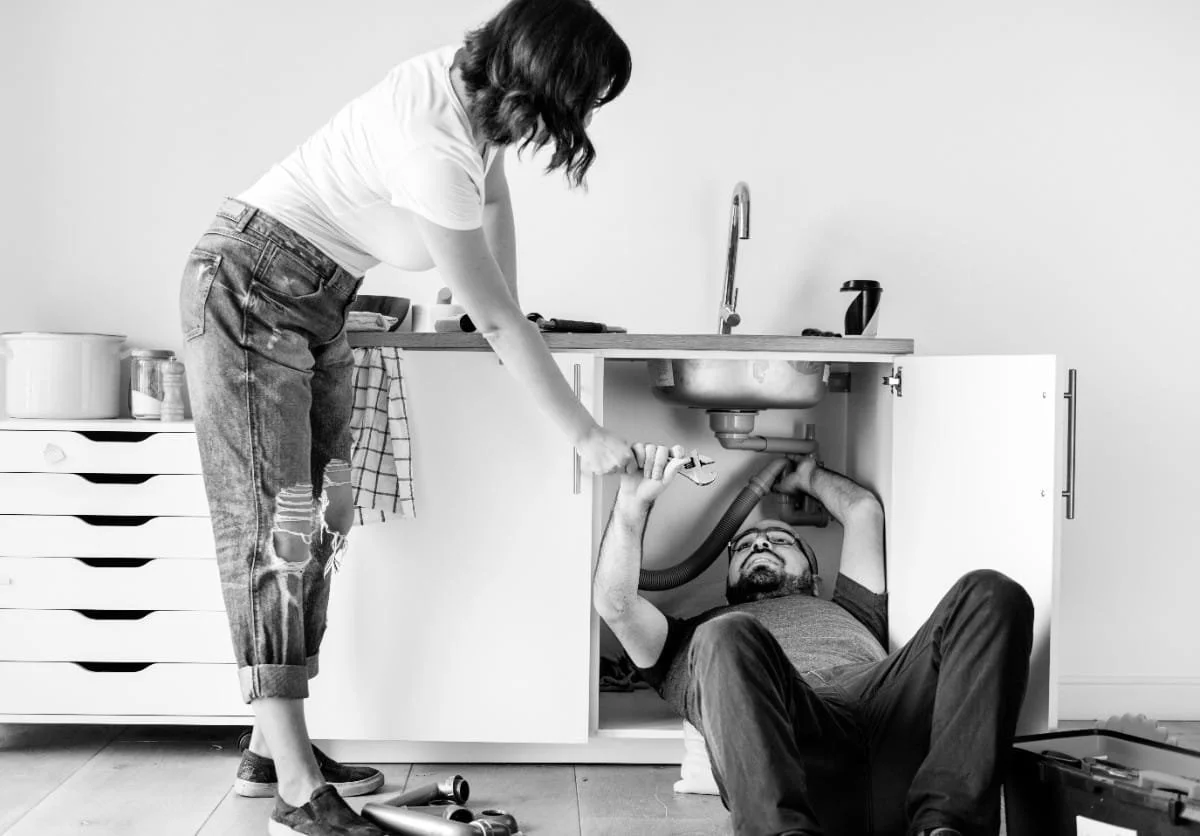
Waking up to a flooded kitchen floor is every homeowner’s nightmare.
Plumbing problems can happen in any American home, often when you least expect them. Knowing how to avoid common plumbing problems can save you money and your sanity.
A small leak may seem harmless at first, but over time it can lead to water damage, mold growth, and higher utility bills. We’re talking about major structural damage and exorbitant utility bills.
Water damage is not always caused by pipes or faucets; if the stain appears on your ceiling after rain, it may be time to check for a roof leak.
This guide covers the most common plumbing problems, practical DIY fixes, and clear signs that it is time to call a plumber.
Important Safety Disclaimer Before You Start
While plumbing repairs may seem straightforward, it can be very risky to perform plumbing repairs whenever there is water, electricity, gas lines or pressurized pipes around. Always, before dealing with any pipes or these DIY fixes, turn off the water main. If you are doing repairs near electric appliances such as water heaters or garbage disposals, make sure to cut the power at the breaker box before finishing any work. While DIY projects save you money, your personal safety always takes precedence. If you have any doubt about a step, cease all use and contact a licensed professional.
Top 10 Common Plumbing Issues and How to Fix Them
Let’s look at the most common plumbing issues homeowners face and the safest ways to handle them. Here are the 10 most common plumbing problems you should know about and how to fix them before they ruin your house. You can probably handle some of these yourself on a Saturday morning, while others will require a professional.

1. Dripping Faucets: How to Fix a Leaky Faucet
A dripping faucet may look minor, but it can waste a surprising amount of water over time.
That steady drip can increase your water bill and may point to worn internal parts that need replacing.
In most cases, the culprits are worn washers or cracked O-rings. They wear down over time due to friction.
In many cases, you can fix a leaky faucet with a few basic tools and a replacement washer or cartridge. Turn off the water supply valves under the sink. Grab a wrench and carefully remove the handle.
Replace the old, damaged washer with a new one, put it all back together, and turn on the water. Once everything is reassembled, turn the water back on slowly and check for leaks.
The EPA notes that a faucet dripping once per second can waste more than 3,000 gallons per year, so this is a strong authority point to add.
How to fix it step by step:
Begin with shutting off the hot and cold shut-off valves at the base of sink If the valves are stuck, do not apply too much force, as old shut-off valves can break. First, lay down a towel across the sink and cover up the drain so that small screws or washers don’t fall in. Afterwards, carefully take off the faucet handle, then remove whichever cartridge, washer, or O-ring corresponds to the type of faucet.
In my experience, a drippy faucet usually ends up being one of three things: boiled rubber washer, done-in O-ring, or dried-out cartridge. Bring the old part with you to the hardware store so that the dimensions are matched correctly. Reassemble the faucet and slowly turn on the water. Run the faucet for a few seconds and then turn it off to see if it continues to drip.
Pro Tip: You can cover the teeth of the wrench with a rag or masking tape to keep them from scratching the finish on your fixture.
When to call a plumber:
Call a plumber if the faucet still leaks after replacing the washer or cartridge, if the shut-off valve under the sink leaks, or if the faucet body itself is cracked.
2. Stubborn Clogs: Drain Clog Solutions & Slow Draining Sink Fix
If water pools around your ankles during a shower, the drain is likely partially blocked by hair, soap residue, or debris. Slow-draining sinks are usually a sign of buildup inside the drain line or P-trap. Hair, soap scum, food particles, and cooking grease can collect inside pipes and gradually form a stubborn clog.
Avoid using harsh chemical drain cleaners as your first option. Seriously, those chemicals eat away at older metal pipes from the inside out.
You need better, safer solutions to drain clogs. Go to your local hardware store and buy a cheap plastic drain snake.
Insert the drain snake into the drain, rotate it gently, and pull out the buildup. It may be messy, but it is often one of the most effective ways to clear a slow drain.
How to fix it step by step:
Step one is to determine if the obstruction is localized to one fixture or spread throughout your entire house. If only a bathroom sink drains slowly, the clog exists at the pop-up stopper, P-trap or directing line simply after. If multiple drains are slow at the same time, the problem could be deeper in the main line.
Take Out bathroom sink stopper and clean Hair, toothpaste, soap build Up Next, put a bucket underneath the P-trap, loosen the slip nuts and remove it with care. Clear the trap, fit it back, run water to see whether has any leaks. When it comes to tubs and showers, use the plastic hair snake before anyone stronger.
Do not use harsh chemical drain cleaners as your first course of action. They can remove a small clog, but they can also sever an old metal pipe or cause safety hazards. This is the simple method with hot water, baking soda, and vinegar for light buildup. If you have PVC drain lines or a porcelain sink, use hot water instead of boiling:
When to call a plumber:
Call a plumber if water backs up into another fixture, if multiple drains are clogged, or if you smell sewage. That usually means the blockage is beyond a simple sink trap.
3. The Endless Flush: Running Toilet Fix
If you hear water running long after flushing, your toilet may be wasting water continuously.
A faulty, warped flapper valve is most likely to blame. When the flapper does not seal properly, water leaks from the tank into the bowl even when the toilet is not being used.
Learning how to fix a running toilet can help reduce water waste and lower your monthly bill. Take off the heavy porcelain lid from the back tank. Look down at the rubber flapper covering the drain hole.
If it looks curled, cracked, or old, replace it. It only takes five minutes to fix a running toilet.

How to fix it step by step:
Take the lid off of the toilet tank and put it in a safe location. First, check the flapper. The rubber should be replaced when it shows signs of warping, cracking, sliminess or stiffening. One of the most common causes of a running toilet is a malfunctioning flapper.
To test for the leak, add a few drops of food coloring into the toilet tank and then wait around 10 minutes without flushing. Color in the bowl — Water is leaking from the tank into the bowl. Most of the time, changing the flapper will fix it. This is the basic dye test for toilet leaks recommended by the EPA.
Next, check the chain. It should be tight enough that it holds the flapper closed, but not so tight that if closes the flapper. It must not be too loose otherwise toilet will not flush properly. Do not have chain too taut Then inspect the fill valve. The fill valve may need to be adjusted or replaced if water continues to rise in the overflow tube.
When to replace the fill valve:
Replace the fill valve if the toilet makes a hissing sound, fills slowly, keeps running after the flapper is replaced, or the water level rises too high in the tank.
When to call a plumber:
Call a plumber if the toilet leaks from the base, rocks on the floor, or keeps running after replacing the flapper and fill valve.
The EPA says old or worn toilet flappers can silently leak thousands of gallons per year, so this is an excellent E-E-A-T point to include in your article.
Pro Tip: Buy a universal replacement flapper. Unhook the small chain, remove the old flapper, install the new one, and reconnect the chain with a little slack.
4. Chilly Showers: Water Heater Not Working
Stepping into a cold shower at 6 a.m. is a frustrating way to start the day. It ruins your entire morning.
When your water heater is not working properly, showers, laundry, and dishwashing quickly become inconvenient. Laundry becomes even more of a struggle.
The main cause is sediment build-up at the bottom of the holding tank. The sediment reduces the available heat. The problem is the problem with electric heaters as well.
Regular maintenance can help your water heater run more efficiently and last longer. Attach a garden hose to the bottom valve. Flush your water heater tank once a year to get rid of hard water sand.
How to troubleshoot it step by step:
You start with simple, yeah. In the case of electric water heater, check if the breaker panel has tripped. If it has, reset it once. If it trips again, shut it off and get a pro because there could be an electrical issue.
If you have a gas water heater, make sure the pilot light is lit. If you smell gas, do not attempt to relight anything. Get away from the area, and call your gas company or emergency service. If there is no odor of gas and the pilot is out, follow the instructions printed on the tank by the manufacturer.
If the temperature of the water is not very warm but it still is not scalding hot, see what was set on the thermostat. Many people recommend to be 120°F for energy saving and scald prevention. Energy. Another do-it-yourself energy-saving tip at www.energysavers.gov is to lower the temperature for hot water heating.
Another problem often arises from algal matter – sediment buildup, an especially common nuisance in areas with hard water. If you hear popping, rumbling or knocking sounds, this could be sediment down on the bottom of the tank. Flushing the tank annually can help, but always turn off power or gas and follow manufacturer instructions.
When to call a plumber:
Call a plumber immediately if the tank is leaking, the water is rusty, the pressure relief valve is dripping constantly, you smell gas, or the breaker keeps tripping.
Pro Tip: Watch your thermostat dial on the front of the tank. Set it to 120 degrees Fahrenheit and you’ll avoid dangerous scalding and lower your energy bill.
5. Hidden Dangers: Leaking Pipe Repair
Brown ceiling stains, damp cabinet floors, musty smells, or soft drywall are warning signs of a hidden pipe leak.
Unrepaired leaks can damage drywall, flooring, insulation, and wooden framing. Mold can begin growing quickly in damp, dark spaces if the leak is not repaired and the area is not dried properly.
Turn off the main water supply to the home right away. Do not delay, because water damage can spread quickly.
For a very temporary hold, wrap heavy plumbing epoxy putty around the crack. The patch will not last long!
A leaking pipe repair involves cutting the bad, corroded section out, and connecting a new copper pipe or push-to-connect fitting. Call us if you do not know how to solder.
How to handle it step by step:
Always the first step is to control water. If there is a shut-off valve nearby, turn it off. If not, switch off the main water supply to the house. Now open a faucet nearby to relieve line pressure and dry the pipe with a towel to determine where exactly you are leaking.
If the leak is only a tiny pinhole, then you may be able to buy yourself time using either a pipe repair clamp or epoxy putty. Wipe the pipe dry with a rag or emery cloth, then put the clamp/putty directly on the leak. It’s not a permanent fix, it’s a stopgap.
More commonly, the defective section of pipe is cut and spliced with a coupling, push-to-connect fitting or soldered copper repair for more permanent work. How to get this exact procedure vary according to the pipe material, pipe size, location and local plumbing code.
When to call a plumber:
Call a plumber if the leak is inside a wall, ceiling, slab, main water line, or near electrical wiring. Also call if the pipe is badly corroded, because one repair may not solve the larger problem.
6. Kitchen Woes: Garbage Disposal Not Working
You turn the wall switch, and you hear a low hum. Or maybe nothing happens at all. A garbage disposal that won’t work can make kitchen cleanup difficult and may create unpleasant odors if food waste is trapped inside.
Dropping fibrous foods like stringy celery or thick potato peels is a bad idea. They get stuck on the grinder blades.
Never stick your hand down the drain. Never. Unplug the unit first from the wall or turn the kitchen breaker off.
How to fix it step by step:
Before doing anything, turn off the disposal switch and cut power at the breaker or unplug the unit under the sink. Never put your hand inside the disposal, even if you think the power is off.
If the unit hums but does not spin, it is probably jammed. Look under the disposal for the small hex-shaped hole in the center of the motor. Insert a 1/4-inch Allen wrench and turn it back and forth several times. This manually frees the grinding plate. After that, press the red reset button on the bottom of the unit.
Restore power and run cold water before switching the disposal on. Cold water helps move food particles through the drain and keeps grease from melting and coating the pipe.
If the disposal is completely silent, check the reset button and breaker. If it still does not work, the motor may have failed.
What not to put in the disposal:
Avoid celery, onion skins, potato peels, eggshells, coffee grounds, bones, grease, and pasta. These items often cause jams or drain blockages.
When to call a plumber:
Call a plumber if the disposal leaks from the bottom, keeps tripping the breaker, smells bad after cleaning, or causes water to back up into the sink.
Pro Tip: Find the hole in the center of the disposal motor near the bottom of the sink. Insert a quarter-inch hex key into it. Wiggle it vigorously back and forth to free the jam. Press the red reset button and try powering on again.
7. The Silent Threat: Signs of Sewer Line Blockage
A sewer line blockage is one of the most serious plumbing problems a homeowner can face. It is every homeowner’s worst fear. Raw sewage is backing up into your clean bathtub. A strong sewage odor in your yard, basement, or drains can be a warning sign of a main sewer line problem.
Tree roots can enter small cracks in older sewer pipes and grow until they restrict or block the line.
You can’t clean that big mess up with a toilet plunger. Don’t try. These signs of sewer line blockage mean something’s seriously wrong.
Call a pro for a high-tech camera inspection. The pro pushes a tiny waterproof camera down the main line and shows exactly where those intrusive roots or cracked pipes are hiding.
How to identify it step by step:
A sewer line blockage usually does not affect just one drain. Watch for several warning signs happening together: toilets bubbling, water backing up into the bathtub after flushing, floor drains overflowing, gurgling sounds from sinks, or a sewage smell near the basement or yard.
Do not keep flushing toilets or running water if sewage is backing up. That only adds more wastewater to a blocked system. Stop using sinks, tubs, showers, dishwashers, and washing machines until the problem is diagnosed.
A small sink clog can often be handled with a plunger or drain snake. A main sewer blockage is different. It usually requires professional equipment such as a sewer camera, drain auger, or hydro jetting.
When to call a plumber:
Call a plumber immediately if sewage backs up into tubs, showers, or floor drains. This is not a normal DIY job because wastewater can expose your home to bacteria and serious damage.
8. Seasonal Nightmares: Common Winter Plumbing Problems
Freezing temperatures can cause standing water inside pipes to expand and create enough pressure to crack the pipe.
As water freezes, it expands. That expansion can split copper, PVC, or PEX lines if the pipe is not protected. The damage often becomes obvious when the ice thaws and water begins leaking from the cracked pipe.
Let me tell you about a homeowner in Chicago last year. They went to visit family in Florida for the holidays. To save a few bucks on the heating bill, they turned their furnace completely off. It was a huge mistake.
A severe freeze hit the city, the pipes in their unheated basement froze solid, and the main line burst open. They came home to a flooded basement, ruined family photo albums, and a massive repair bill. Do not let this happen to you.
So, keep an eye out for these common plumbing problems before the first freeze. Find any exposed water lines in your cold crawl space or unfinished basement.
Wrap them securely in thick foam pipe insulation and tape the seams closed.
How to prevent frozen pipes step by step:
Before the first hard freeze, walk through your basement, crawl space, garage, laundry area, and under-sink cabinets. Look for exposed water lines, especially pipes near exterior walls. Wrap those pipes with foam pipe insulation and seal gaps where cold air enters around the pipe.
Disconnect garden hoses from outdoor hose bibbs before freezing weather arrives. If your home has indoor shut-off valves for outdoor faucets, close them and open the outside faucet to drain leftover water.
During extreme cold, open kitchen and bathroom cabinet doors so warm air can reach pipes under sinks. Let cold water drip from faucets served by exposed pipes. The American Red Cross says even a trickle of running water can help prevent pipes from freezing, and if you are away during cold weather, keep the heat on at no lower than 55°F.
If a pipe freezes:
Keep the faucet open and apply gentle heat with a hair dryer, heating pad, or warm towels. Never use a blowtorch, propane heater, charcoal stove, or open flame to thaw a frozen pipe.
When to call a plumber:
Call a plumber if you cannot locate the frozen section, cannot thaw it safely, or see signs of a burst pipe.
Pro Tip: Moving out of town for the winter holidays? Keep the temperature set at least 55 degrees and open the doors to your kitchen and bathroom cabinets so warm air can circulate around the pipes.
9. Frustrating Low Water Pressure
An unhappy trickle from the showerhead is really annoying. Rinsing your shampoo out of your hair takes forever.
White minerals from hard municipal water fill up the tiny spray holes. Old galvanized steel pipes corrode from the inside out and shrink the water path to the size of a straw.
Take off the metal aerator on the faucet’s tip. Place the pieces in a small bowl of white kitchen vinegar.
Let it sit there overnight. Swab away the loose scale with an old toothbrush and reattach for greater flow.
Check your main pressure reducing valve (if you are experiencing low pressure all over your home), or worse, it is possible there is a huge hidden leak that is emptying the system.
How to troubleshoot it step by step:
First, we need to find out if the low pressure occurs only in one fixture or whole house. If the problem with low pressure is at one faucet only, it is often because of a clogged aerator. If you do not wish to buy a water softener, you can unscrew the aerator from the faucet tip, soak in white vinegar overnight, scrub with an old toothbrush, rinse and reinstall.
If the water pressure is low only in the shower, disassemble the showerhead and remove mineral scale from the screen and spray holes. White deposits forming reduce flow for water people often find because they have hard water.
If your water pressure is low throughout the entire house, look for the main shut-off valve (in some cases near where the water enters ) and ensure it is fully open. Next, if your house has a pressure-reducing valve (PRV), check the settings of that as well. Weak pressure in the whole house could be a failing pressure regulator.
Sudden low pressure can be another tip off of an unseen leak. Make sure to look for wet areas, water marks, odd green patches in the yard or a spike on your water bill.
When to call a plumber:
Call a plumber if the whole house has low pressure, if pressure drops suddenly, if you hear hissing inside walls, or if your home has old galvanized pipes. Those pipes can corrode from the inside and restrict flow over time.
10. Outdoor Hose Bibb Leaks
Summer is over. You get busy and forget to unscrew the green garden hose. Winter arrives fast. The trapped water in the brass spigot freezes and cracks the metal housing.
All of a sudden, spring has finally arrived, and you turn on the hose. Soon, water squirts everywhere on your wall. Your foundation is severely damaged.
Always disconnect your outdoor hoses early in the fall. If the spigot is cracked, replace it immediately with a new, frost-proof bibb.
Frost-proof versions keep the actual shut-off valve deep inside the warm walls of your house. It stops the freezing issue entirely.
How to fix and prevent it step by step:
First, disconnect the garden hose and inspect the hose washer. A worn rubber washer is one of the easiest causes of a hose connection leak. Replace the washer and tighten the hose connection by hand. Do not overtighten it with pliers because you can damage the threads.
If water leaks from around the handle, the packing nut may be loose. Tighten the packing nut slightly with a wrench, then test the faucet again. If it still leaks, the internal washer or stem may need replacement.
If water leaks inside the wall when the hose bibb is turned on, shut the water off immediately. That often means the pipe or faucet body froze and cracked during winter.
For prevention, disconnect hoses before freezing weather, install insulated faucet covers, and consider replacing older outdoor faucets with frost-proof hose bibbs. Frost-proof models place the shut-off point farther inside the warm part of the house, which reduces freezing risk.
When to call a plumber:
Call a plumber if water leaks inside the wall, the hose bibb is cracked, the pipe spins when you try to remove the faucet, or you want to upgrade to a frost-proof model.
Safe & Effective Homemade Solution for Clogged Drains
Old pipes, untreated, get clogged from harsh chemicals that destroy your plumbing. You burn your skin and eyes. Clogged pipes are bad news for everyone. Get a natural, homemade way to get rid of clogged drains that is cheap and safe for your whole family.
Pour a full pot of rolling boiling water down the dirty drain. Add half a cup of dry baking soda and pour that right down the hole.
Now, add one cup of plain white vinegar. Watch the mixture bubble up as it breaks through the grease and soap scum.
Cover the drain with a rubber plug for ten minutes. Flush all the gunk away with another pot of boiling water. Problem solved!
Health & Safety Risks of Ignoring Plumbing Problems
In a small pipe leak, it seems perfectly fine to put a plastic bucket under it and forget about it for weeks. But don’t. Moisture from leaks can create conditions for mold and mildew growth within a short time, especially in dark or poorly ventilated areas.
Breathing in mold spores causes severe and persistent respiratory problems. For some people, mold exposure can worsen asthma symptoms, allergies, and other respiratory issues.
Damp, decaying wood attracts hungry termites and carpenter ants. These pests can damage wooden framing and other structural materials over time.
Leaks near wiring, outlets, appliances, or breaker panels can also create electrical hazards Water that drips onto copper wiring behind walls is enough to cause electric shorts, which can set off a fatal house fire while you’re asleep. Never ignore a small leak. Your family’s health and safety depend on it.
Frequently Asked Questions
What are the most common plumbing problems?
Dripping faucets, clogged drains, running toilets, low water pressure, leaking pipes, and water heater problems are among the most common plumbing issues in homes. Almost every single house gets them eventually. They are annoying but usually very easy to fix yourself.
Can I just ignore a running toilet?
Absolutely not. This is a horrible idea. You waste so much clean water every day. Your utility bill will go up in a month!
Are chemical drain cleaners safe for my house?
No. They sit inside your pipes and slowly eat the metal away. Professional plumbers hate them. Use only natural methods or physical tools.
Conclusion
Owning a home is hard work. Old pipes leak. Drains become clogged up. Water heaters break down suddenly on a Tuesday morning.
But you always have options. If you catch the common plumbing issues early, you’ll save thousands of dollars on repair costs.
Always check on your house for simple annual maintenance tasks: change out old, leaky rubber washers, and keep an eye on your water bills for sudden, unexplained increases. Be proactive with the health of your property!
When your house starts to bubble, don’t panic. We are here to help. Reach out and book a quick consultation today. We will keep your water flowing all year long.