Choosing a cabinet color is a major commitment. Paint the walls wrong? You can repaint them in an afternoon. On the other hand, choose a bad color or finish for your cabinets, and you’re going to be staring at it for years to come, or paying someone a lot of money to fix it.
Which is exactly why great kitchen cabinet color ideas deserve a bit longer than five minutes of scrolling Pinterest at midnight.
Kitchens will feel less like showrooms and more like actual homes in 2026. The stark white trend is fading. Cool, blue-based gray is showing up less often in newer kitchen designs, especially compared with warmer neutrals like mushroom, taupe, putty, and soft greige. What’s replacing them? Warmer, softer shades that actually look like you chose them on purpose.
I’ve been tracking these shifts for quite some time. Talking to designers. Following what is actually being sold in cabinet showrooms, not just the flavor of the week on social media. Here is what color kitchen cabinets are in style right now, along with a few that are already going out of style.
Before repainting existing cabinets, especially in an older home, check the condition of the current finish. If the cabinets may have old paint, lead paint, water damage, mold, or peeling coatings, handle the prep work carefully or ask a qualified professional before sanding.
Quick Answer: Best Kitchen Cabinet Colors for 2026
The best kitchen cabinet colors for 2026 are warm whites, mushroom neutrals, soft greige, olive green, forest green, smoky navy, charcoal, espresso brown, and natural wood tones like white oak and walnut. For small kitchens, lighter shades such as cream, pale oak, and warm white usually work best because they reflect more light. In larger kitchens, deeper colors can look beautiful on lower cabinets, islands, or feature walls, especially when balanced with light countertops, warm metals, and good lighting.
If you want the safest long-term choice, choose a warm neutral or natural wood finish. If you want something more current but still livable, try olive green lowers, a walnut island, or mushroom-colored Shaker cabinets.

Kitchen Cabinet Colors 2026: What’s Actually Working
Forget the notion that a single color of the year reigns supreme. It’s really about four big buckets — and most kitchens borrow from two or three of them at a time.
Warm “Not-Whites” Are Taking Over
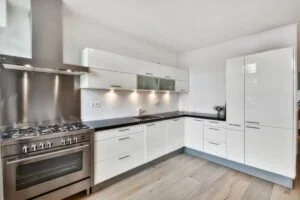
We’ve seen stark white cabinets for a long time. Pure white, which looks nearly blue under some bulbs, feels cold. Clinical, even. Like a dentist’s office with a nice backsplash.
The replacement? Whites that are warmer and have a touch of creamy undertones. Chantilly white. Mushroom. Soft greige. Putty.
These colors reflect light and brighten up the area exactly the way a pure white does. It just doesn’t feel sterile to live with them. Once that is paired with a wood floor and brass pulls, the entire area comes alive. A white cabinet kitchen still works in 2026 — you just need to choose the right shades.
Earthy Greens Are Sticking Around (and Getting Moodier)
Green cabinets aren’t new. But the precise tone is turning. Pale sage is yielding to darker, more layered greens: olive, forest, and smoky jade.
They work so well because these colors in their various shades are not shouters. They just sit there cool and grounded, like a good pair of jeans. You don’t see them at first, and then you can’t stop seeing them.
For a bolder style, some designers are integrating terracotta or rust as an accent color, not necessarily all over the kitchen — perhaps just on one island or an expanse of open shelving.

Earthy green kitchen cabinets
Moody Darks Are Becoming Easier to Use as Neutrals
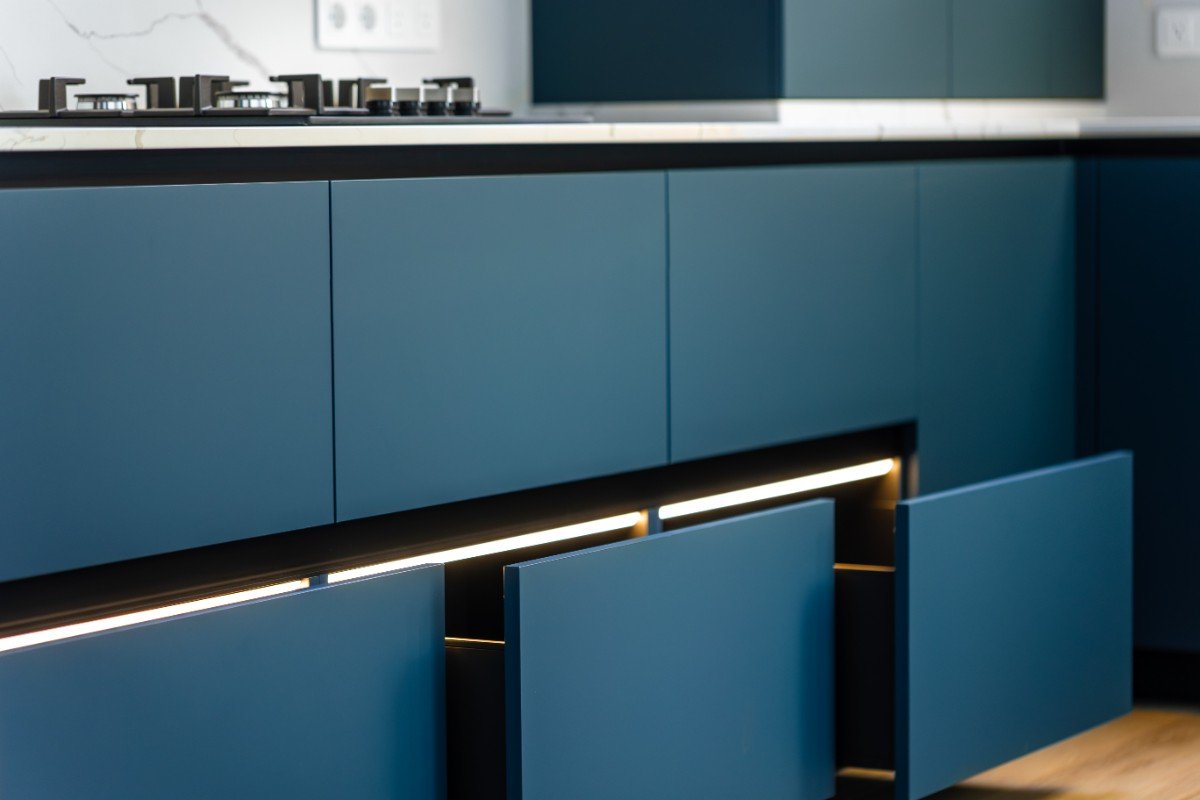
Cool gray is no longer the automatic default it was a few years ago. In many updated kitchens, deeper and warmer shades like midnight navy, soft charcoal, espresso brown, and dark olive are being used instead, especially on islands and lower cabinets.
Here is what nobody tells you right off the bat: dark cabinets need real light to look great. A kitchen with weak overhead lighting and charcoal lowers will feel like a cave, not the pages of a design magazine.
It’s best to reserve them for lower cabinets only, or a kitchen that is already inundated with natural light. Having pendant lighting in an island area goes a long way, too. Light countertops also help balance it out.
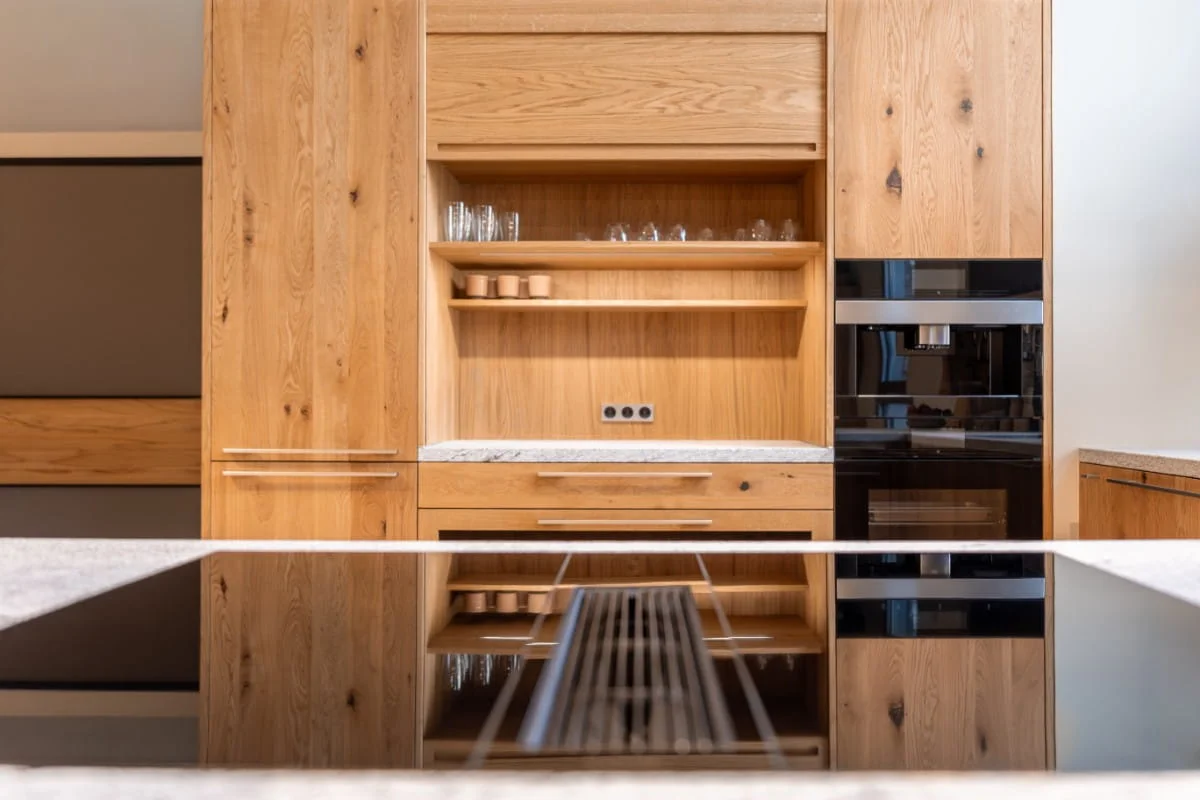
Natural Wood Grain is Back (and Doesn’t Look Like 1998)
For decades, wood cabinets meant orange-cherry oak straight out of the late 90s. Not anymore. European white oak, walnut, and mid-tone stains that actually let the grain show are having a real moment in 2026 kitchen cabinet color trends.
What’s different now is texture. These wood cabinets aren’t being camouflaged. Homeowners flaunt the grain, often paired with a painted island or upper cabinets for contrast.
Best Kitchen Cabinet Colors by Kitchen Size and Style
You cannot use every color in all kitchens. A shade that works great in a 400-square-foot open layout can completely devour an itty-bitty galley kitchen.
Kitchen Cabinet Color for Small Kitchens:
Small kitchens live and die by light reflection. You need to stay with colors that radiate rather than absorb light.
- Pale cream or warm white
- Soft butter yellow
- Light woods, like a pale oak
Do not do an all-over dark color here. Sure, charcoal photographs are good, but in a stifling galley kitchen with one tiny window, it can feel like the room is closing in around you. Still set on something darker? Now, make a single wall, or just an island, and keep everything else light around it.
Matching Cabinet Color with Your Home’s Style:
Here are some kitchen color schemes that aren’t just for mood boards but actually come up in real homes:
- Modern: Colors like charcoal or navy, flat-panel doors with very little trim.
- Farmhouse: A sage green or warm tone of wood, matte black pulls that seem to go on forever — perhaps an open shelf here and there.
- Timeless: Warm greige or mushroom, brushed brass hardware, and classic Shaker doors.
- Coastal or cottage: Soft sea-glass blue or muted sage, paired with polished nickel and light countertops.
Best Cabinet Colors by Situation
The right cabinet color depends on more than trends. Kitchen size, natural light, resale plans, budget, flooring, countertops, and hardware all change how a color looks in real life. Use this quick guide before choosing your final cabinet color.
| Cabinet Situation | Best Colors to Consider | Colors or Finishes to Avoid |
| Small dark kitchen | Warm white, cream, pale oak, soft greige, light mushroom | Full charcoal, espresso, black, or very dark green on every cabinet |
| Small kitchen with good natural light | Warm white, pale sage, light oak, muted blue, creamy beige | High-contrast two-tone colors that visually chop up the space |
| Large open-concept kitchen | Mushroom, olive, walnut, navy island, charcoal lowers, warm white uppers | Stark white everywhere without wood, texture, or warm accents |
| Resale-focused remodel | Warm greige, white oak, soft taupe, cream, classic warm white | Very trendy colors used on every cabinet, such as bright green, bold blue, or heavy black |
| Budget cabinet repaint | Satin warm white, sage green, mushroom, putty, soft charcoal | High-gloss lacquer, ultra-dark colors without proper prep, or colors that clash with existing floors |
| Family kitchen with heavy use | Medium wood tones, warm greige, olive, taupe, satin or semi-gloss finishes | Flat paint, pure white lowers, or very dark glossy finishes that show fingerprints |
| Luxury kitchen | Walnut, white oak, deep navy, espresso brown, charcoal, warm white with stone countertops | Cheap-looking gray laminate, overly shiny finishes, or colors that fight the countertop veining |
| Farmhouse kitchen | Sage green, cream, warm white, natural oak, mushroom | Cool blue-gray, glossy white, or overly modern black-and-white contrast |
| Modern kitchen | Soft charcoal, walnut, warm white, muted navy, flat-panel oak | Orange-toned wood stains or busy color combinations |
| Coastal or cottage kitchen | Sea-glass blue, muted sage, warm white, pale oak, soft cream | Heavy black, dark espresso everywhere, or cold industrial gray |
A good rule is to choose one main cabinet color, one supporting neutral, and one natural texture. For example, olive green lower cabinets, cream uppers, and white oak flooring will usually feel more balanced than using three strong colors at the same time.
Read More: Interior vs Exterior Paint: Key Differences, Uses, and Mistakes to Avoid
Kitchen Cabinet Color Combinations You Should Try
Here are a few variations that actually appear in real kitchens:
- Wood and white: Stained wood island or lowers, with warm white uppers. It’s clean and hardly ever looks out of date after five years.
- Forest green and cream: Use deep green on the lower cabinetry to ground the room’s feel. Airy, cream-colored upper cabinets are a simple way to keep it feeling light and open.
- Grey and white kitchen cabinets: Replace the steely cold grey with a warm charcoal, paired with Chantilly white instead of stark white. It has the same gist but is far more hospitable in person.
If I had to give you one rule, it would be this:
Choose a bold color and then pair it with neutrals or wood texture. Using three super-bright colors all at once often looks too busy rather than intentional.
What Cabinet Colors Are Outdated?
Architecture and interior design have long cycles, but kitchen trends change rapidly. A few things that felt fresh two years ago are already looking very dated.
- Cool, clinical gray:
The kind that shades toward blue or steel. It made sense when everyone wanted that spa-like, sterile aesthetic. Now it just reads cold compared to all the brilliant warm tones arriving everywhere else.
- High-Gloss and Lacquer-Look Finishes:
High-gloss cabinets can still work in very modern kitchens, but they are less forgiving in everyday use. Fingerprints, water spots, scratches, and uneven reflections tend to show more clearly than they do on satin, matte, or natural wood finishes. For most homes, a softer satin or matte cabinet finish usually feels warmer, easier to maintain, and more current.
- Coating the entire kitchen in a single trend color:
This is where walls, trim, and cabinets are all painted the same sage green. For six months, it looked very cohesive. Now it reads flat, and in all honesty, a little dull. The one-color-everywhere option is fading in favor of layering colors and materials.
Pro Tips for Choosing Your Cabinet Colors
1) Never Trust a Screen
A color that seems like perfection on the tiny screen of your phone will look completely different once it’s slathered onto an actual door in your real-life kitchen. Lighting literally changes everything.
Grab a sample. Paint a swatch about the size of a poster board and tape it up on your cabinet. Check it in the morning. Look at it again when the lights are on. Kitchens that face north receive cooler light, which is why sage or a soft eucalyptus green generally works best. Bold, dark colors are often a better fit for south-facing kitchens where they aren’t as likely to go flat.
2) Mix Your Metals on Purpose
The old rule was to match every finish in the kitchen. Not anymore. Want to throw brushed brass fixtures in with a matte black cabinet pull and chrome appliance pulls? That’s not a mistake right now. One of the easiest ways to make a kitchen feel collected rather than showroom-ready is to mix warm and cool metals intentionally.
3) Do Not Skip the Safety Basics
Cabinet painting may look like a simple weekend project, but sanding, stripping, priming, and spraying can create dust and fumes that need to be handled carefully.
If your home was built before 1978, test for lead paint before sanding or scraping any painted surface. Older paint may contain lead, and disturbing it can create hazardous dust. If lead is present, consider hiring a lead-safe certified professional rather than treating it like a normal DIY paint job.
Ventilation matters too. Paints, primers, strippers, and solvents can release strong fumes, especially in enclosed kitchens. Open windows when possible, use fans to move air outdoors, and follow the safety instructions on every product label. Wear proper eye protection, gloves, and a well-fitting respirator or mask when sanding or working with strong primers or solvent-based products.
Also, be careful with dust control. Remove food, cover nearby surfaces, seal off adjacent rooms if needed, and clean thoroughly before using the kitchen again. If you are pregnant, have young children, have asthma, or are sensitive to fumes, it is safer to leave the area during heavy sanding, priming, or spraying.
This article is for general design and planning guidance only. For lead paint, mold, electrical issues, structural damage, or major cabinet modifications, consult a qualified professional before starting the project.
Frequently Asked Questions
What is the best color for kitchen cabinets in 2026?
This year, the focus is on soothing tones like warm neutrals and earthy greens. Imagine soft, warm white, mushroom shades, and sage or olive green — particularly when framed with natural woods and touches of warm metals.
What are the new kitchen trends for 2026?
Beyond just paint, expect appliance garages camouflaged behind cabinet finishes in matte or satin textures rather than high-gloss paint. Also, look out for low-profile hardware to supplant the flush-mount look, and natural wood grains replacing all-painted styles.
What color is replacing gray in 2026?
The steel gray of cool, blue tones is being replaced with warm mushroom, taupe, and charcoal. It all comes down to the warmth of the space.
Are two-tone kitchen cabinets in style in 2026?
The answer is yes, although the aesthetic has become much more down-to-earth. When you pair a deeper color lower cabinet with a lighter upper or mix wood and paint, that setup is more ageless than high contrast combos.
What cabinet color is outdated?
Those cool, blue-toned gray finishes and high-gloss lacquer looks are trending down the fastest right now.
What are good kitchen color ideas with white cabinets?
Use your backsplash and flooring to bring in some warmth. An all-white kitchen can feel more sterile or too clinical without a warm stone backsplash or natural wood floor to cradle it.
What is the new kitchen design in 2026?
The newest designs lean heavily into layering textures, combining painted elements with exposed wood grain, and utilizing hidden storage (like appliance garages) to keep countertops clear while maintaining a warm, lived-in feel.
Final Thought
Great kitchen cabinet color ideas aren’t just about what’s trendy this month. It’s about what you will still want to look at five years from now, long after this trend cycle has moved on to something else.
Pick up a few trial pots rather than diving in headfirst. Tape swatches in your actual kitchen, with the lighting you have, and live with it for a few days before making up your mind. These colors—warm neutrals, earthy greens, moody darks, and natural wood—aren’t just passing fads. These colors have stronger long-term potential than a single viral trend because they are easier to pair with natural wood, stone countertops, warm metals, and common flooring choices. So, what combination will you try for your kitchen?
Editorial Review: This article was reviewed before publication for clarity, safety, and practical home improvement accuracy. The cabinet color recommendations were checked against real kitchen renovation factors such as lighting, finish durability, countertop pairing, and long-term maintenance.