Let’s be real. Kitchen remodels cost a lot of money. We know this all. You drop thousands of dollars on custom cabinets. You spend weeks picking out the perfect floor. But do you know what? The countertop always catches everyone’s attention. It’s the first thing people touch.
Clients constantly ask me, “What are the different types of countertops out there today?” It makes total sense. The market is now flooded with so many options. It can get confusing very quickly.
A few years ago, a countertop was just a flat surface for chopping onions and throwing letters on. Now it’s no longer that. Now it’s the very center of your home.
You drink your morning coffee there. Your kids drink juice there while they do their homework. You hang out around it with friends on Friday nights.
Well, this guide will break it all down for you. We’ll look at the materials. We’ll calculate the actual costs. And once completed, we will show you exactly how to style the space.
What is a countertop in modern design?
Ask yourself how you lead your life. The kitchen is out of the back of the house and not a place to hide anymore. Thanks to open floor plans, everything has changed.
That island is the dining table. It’s the home office. It’s the neighborhood bar. We hope that this information helps you understand why your choice of surface material is crucial now more than ever. It needs to look amazing. The other thing is that everything needs to get whipped into shape every single day.
What are the different types of countertops?
You want the best for your home. I understand. But you need to know exactly what’s available on the market right now. Let’s take a look at the most popular items on the US market. Your first task will be to understand the pros and cons of each material.
| Material | Description & Notes | Key Benefits | Drawbacks / Maintenance |
| Granite | Mother Nature made this one. 100% natural stone cut directly from the ground. | Each slab looks completely different. Withstands heat exceptionally well. | – |
| Quartz | Engineered stone is made in factories by mixing crushed natural quartz crystals with heavy resins. | Incredibly strong. Requires almost no maintenance. | – |
| Porcelain | The new favorite, fired at extreme temperatures. | Handles hot pots with ease. Doesn’t stain. Usable in outdoor kitchens. | – |
| Marble | The epitome of classic luxury. | Looks great on the pages of a magazine. | Stains easily. Can get scratched if you’re not careful. |
| Butcher Block | Wood surface that brings a warm, natural feel to your island. (Note: As you mentioned, a great fit if you love wood and recently built projects like a floating shelf!) | Warm and natural aesthetic. | Needs to be oiled regularly. |
| Concrete | Has a cold and industrial look. | Looks quite rough and modern. | Takes a lot of work to seal and keep it clean. |
| Laminate | Your budget-friendly hero. | Modern laminates are stunning. Gives the look of stone for a fraction of the price. | – |
What material would you use to build countertops?
It all depends on the style of your home. Do you want a completely modern look? Then choose quartz with clean, sharp edges.
Are you building a rustic farmhouse-style kitchen? Then, a thick butcher block will fit the bill. Want a classic and evergreen feel that will never get old? Then, natural stone is best for you.
Basically, think about your daily routine. Kids are always dropping something sticky. Hot pans are falling out of your hands. Choose a material that will stand up to your real life. Don’t just buy something that looks pretty in the picture.
Sustainable and Eco-Friendly Countertop Options
Having worked in the field of kitchen design and remodeling for more than 15 years, I have seen a huge change in what matters to homeowners. Sustainability is no longer a second thought, but rather a deciding factor in countertops today.

Just a handful of materials are both incredibly beautiful, perform exceptionally well, and are sustainably designed:
- Bamboo: It is a rapidly renewable resource is more durable than many hardwoods and looks great with age. Bamboo countertops bring rustic charm and warmth to kitchens, in addition to reducing deforestation.
- Recycled Quartz: By using post-consumer glass, stone remains and resin, recycled quartz transforms into a non-porous and highly durable surface that will reduce material going to the landfills. Visually and performance-wise, it mimics regular quartz, offering a clear ecological edge.
- Reclaimed Wood: Salvaged material from barns or factories gives a unique look. These butcher block countertops preserve natural character as well as prolong materials found in your home.
- Paper Composite: Resin-infused high-density recycled paper creates an extremely smooth finish. It is exceptionally heat, scratch, and stain resistant, which makes it a rather terribly encouraging choice for contemporary kitchens.
From my perspective, these eco-friendly alternatives are not just “green choices” – they are effective. They not only endure the striving for cooking, homework and the daily grind but also play an active role in sustainability. Not only is choosing an eco-friendly countertop a stylish, durable, and worry-free choice.
Which is better, granite or quartz?
This is a big fight. The heavyweight championship of kitchen design. People argue about it every day on the internet.
Let’s settle it here today. Both materials are great. Both greatly increase the value of your property. But in real life, they behave very differently.

Read More: How to Plan a Kitchen Remodel: Step-by-Step Checklist
Is granite better than quartz?
The answer is yes and no. It’s entirely up to you. Granite blows away the competition when it comes to heat resistance.
You can take a pot of boiling pasta off the stove. You can put it right on the stone. No problem. No burn marks.
It also gives you a completely unique look. No one else in the world will have the exact same design as you. The veins and colors are completely unique.
But quartz is taking over the market. Why? Because you never have to seal it. Never. It fights stains much better than natural stone. It can handle messy kids and spilled drinks without a worry.
Red wine on white quartz? Wipe it off with a paper towel. Done. On unsealed granite? You might have to look at that pink stain for the next ten years.
What is cheaper granite or quartz countertops?
Money really does matter. For most families, the budget is the final deciding factor.
Generally speaking, basic granite saves you money up front. Entry-level granite slabs start at around $45 per square foot. And basic quartz typically starts around $70. But wait a minute. Prices can change quickly based on color.
Exotic granite with wild blue veins can easily top $100 per square foot. High-end designer quartz sells for $130 all day long.
And don’t forget about fabrication fees. It costs extra to drill holes for an undermount sink. It costs extra to get a nice, rounded edge. Always get three solid quotes before signing a check.
Durability and Pricing Facts
You need something that will last. You’re spending thousands of your hard-earned dollars. A mistake here can mean big losses. Let’s talk about real-life torture. The kitchen is a workspace. Your surfaces need to function as such.
What is the most durable countertop material?
Want to blow all your savings? Look into high-grade natural marble. Or find exotic granite imported from overseas. These stones are insanely beautiful. They exude luxury. But you’ll pay a hefty premium for that particular look.
We’re talking $150 to $200 per square foot. Sometimes more.
Custom cast concrete also eats up your budget pretty quickly. All the money goes to labor alone. Special diamond blades are required to cut high-end porcelain. That makes the installation cost skyrocket.
Sizing and Installation Prep
Installation day brings pure stress. There is dust everywhere. Strangers walk through your house. You must be ready for it.
How thick are countertops?
You’ll find two standard sizes in the US market. Slabs come in 2cm or 3cm thicknesses. A 3cm slab is quite thick. It’s also very heavy. It sits directly on top of your bare cabinets. It looks very rich and solid. Most premium kitchens in the US today use 3cm stone.
A 2cm slab is relatively thin. It also weighs a lot less. Installers first lay down a sheet of plywood to support it.
Then they glue a small piece of stone to the front edge. This makes it look much thicker. While this saves money, it’s more labor-intensive.
Pro tip: Your base cabinets need to be rock-solid. I learned this the hard way on a past project. Your cabinets carry hundreds of pounds of dead weight. Before the stone men come in, check your cabinet frames. Are the door hinges loose?
Take a Phillips-head screwdriver. Break a few wooden toothpicks in half. Pack the loose screw holes tightly with wood. Break them flush with the frame. Retighten the screw. Make sure those cabinets are completely solid and secure before you put the stone on top.
How to style kitchen counters
Finally, the dust settles. The workers leave. Your kitchen looks brand new. But it feels empty. It feels like a hospital room. Now it’s time to bring it back to life.
Work always comes first. Hide the ugly things. Put the toaster in the pantry. Hide the heavy blender from sight.
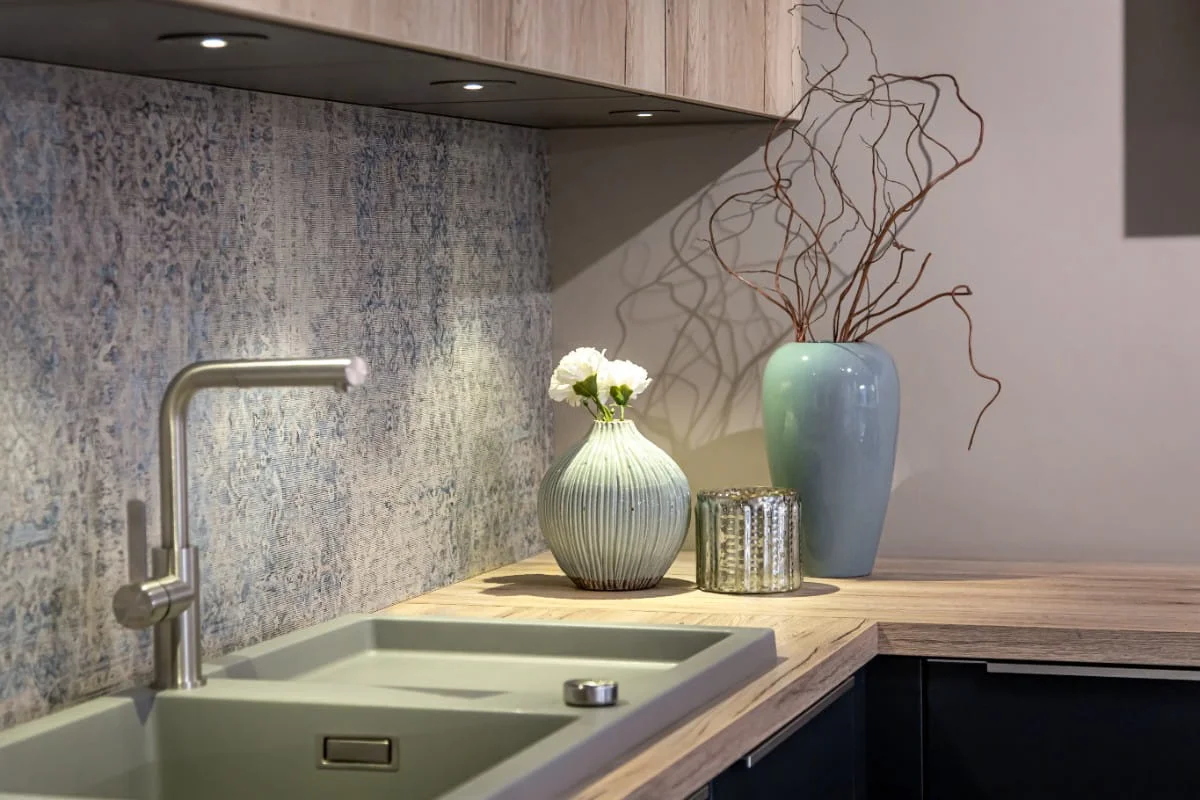
Use a nice wooden tray right next to the stove. Place your olive oil, salt shaker, and pepper grinder on it. It looks so neat. The little everyday messes are all tucked away in one easy place. You can just lift the tray to clean the stone.
How to decorate a kitchen counter
Bring in some warmth. Large slabs of stone look cold. They feel lifeless to the touch. You need to soften the room a bit.
Grab a large wooden bowl. Fill it to the brim with fresh green apples or lemons. That pop of bright color against the dark stone works like magic.
Place a small potted plant near the window. The green leaves instantly change the mood of the kitchen.
Place a thick, heavy cutting board against the tile backsplash. It adds a nice wood texture in the background.
Buy a nice glass pump for dish soap. Throw away that ugly plastic bottle you buy at the grocery store. In a high-end kitchen, the little details make all the difference.
Create a small, separate coffee station. Place the coffee maker on a clean mat. Arrange a few pretty mugs next to it. This will brighten up your Tuesday mornings.
Frequently Asked Questions
People ask me the exact same questions every single week. There is a lot of bad information out there. Let’s run through the actual facts.
Why don’t people use granite anymore?
This is a complete myth. People in America buy thousands of slabs of granite every day. It is still a classic choice.
However, it has recently lost some market share to quartz. Why? Busy people hate maintenance. They don’t want to remember to seal a stone every year. They just want to wipe it down with a cloth and go to sleep.
Which is more pricey, granite or quartz?
It depends on which slab you’re pointing your finger at. Cheap granite costs less than cheap quartz.
But what about the high-end stuff? The picture is completely reversed.
Rare granites are much more expensive. Standard quartz, on the other hand, is priced pretty much the same everywhere.
Why is quartz on the decline?
In fact, its popularity is not waning at all. But some ultra-high-end designers are getting bored with it.
They want the wild and unexpected look of real marble or quartzite. Quartz looks perfect. Sometimes it feels a little too perfect.
In a ten-million-dollar custom home, this perfection can seem a little artificial to the eye of an experienced person.
Which one is better, quartz or granite?
By now, you probably know the answer. Look at your bank account. Look at your cooking style. Do you bake regularly? Do you need an ice-cold surface for rising dough? Then go for marble or granite.
Do you hate cleaning? Do you hate the idea of buying a stone sealer? Then go for quartz. It wins the low-maintenance game hands down every time.
The bottom line
You’ve come to the end. Choosing the right surface is a big deal. It changes the way you cook, eat, and live in that room.
Balance your budget with your real life. If you have three messy kids in the house, don’t buy a stone that requires a lot of maintenance.
If you’re planning to sell your house next year, don’t spend tens of thousands of dollars on an exotic stone.
Granite brings natural beauty and the ability to withstand extreme heat to the table. Quartz brings peace of mind and a stress-free life. Porcelain gives that sleek, ultra-modern look.
Choose something that will put a smile on your face when you turn on the lights at 6 a.m.
Which material are you considering for your next remodeling project? Are you on the natural stone team or the engineered quartz team? Contact us today for a quote or a quick consultation. We’ll help you find the perfect slab for your home.